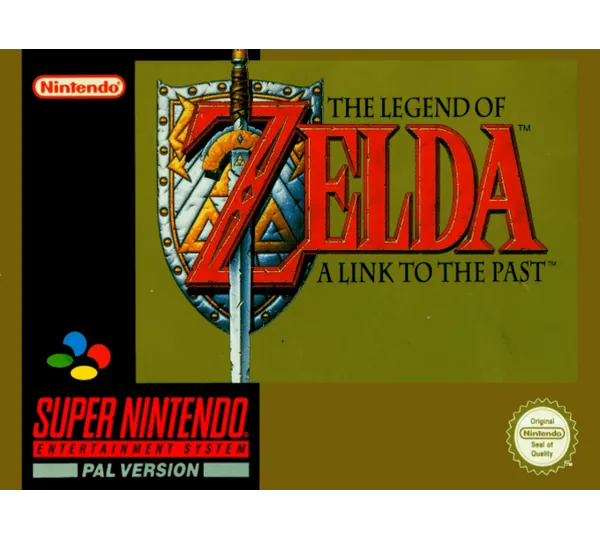
System: Super Nintendo Entertainment System
Release date: 1991
Post Contents:
ToggleThe Legend of Zelda: A Link to the Past SNES is the game that looked at a perfectly good kingdom, spun it upside down, and said: now do it all again, but nastier.
Nintendo’s 1991 adventure sends Link out of bed on a stormy night to rescue Princess Zelda, and then keeps finding bigger jobs for him: three pendants, one sword in a forest, a wizard in a castle and a very large pig-faced gentleman waiting in a second world. It takes the top-down Zelda recipe of the original and wraps it in proper story, proper dungeons and a map you could lose a whole summer in. In 2026, does The Legend of Zelda: A Link to the Past SNES still feel like a treasure, or has it been left in a pot on the shelf?
Gameplay: Dig, Dash, and Discover
You explore Hyrule from above, swinging a sword that you can upgrade, behind a shield that blocks arrows, and picking up a belt of gadgets as you go. Every dungeon has a big chest with the item that cracks it open: the bow, the hookshot, the hammer, the fire rod, the lantern, and the Pegasus Boots for those ‘I will just run at that wall’ moments. The lantern and the rods eat your magic, so you ration them like the last biscuit in the tin.
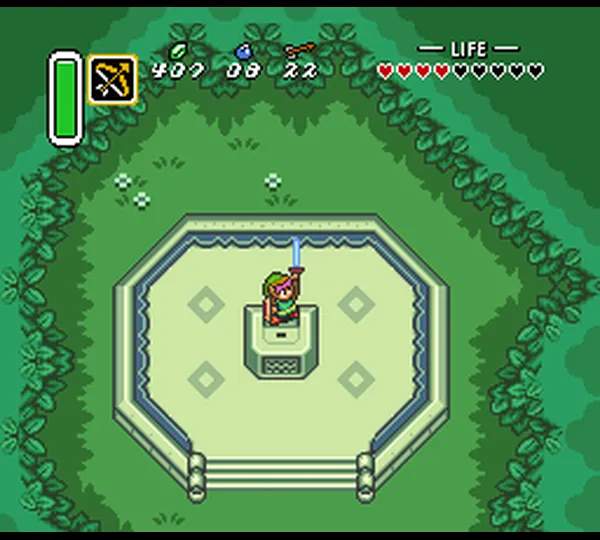
The structure is the clever bit. Your first job is to collect three pendants from the dungeons of the Light World to earn the Master Sword, and then the whole game folds in half. A portal drops you into the Dark World, a twisted copy of Hyrule with the same layout but different enemies, villagers and dungeons, and the only way home is the Magic Mirror. You hop between the two to get past blocked paths, and the thrill of working out how a hole in one world opens a door in the other never really fades. Four Heart Pieces build a Heart Container, so poking around every cracked wall and odd-looking bush really does pay off.
The Bunny Curse? Wander into the Dark World without the right protection and Link turns into a pink rabbit that cannot swing a sword or use a single item. It is funny the first time and a nuisance every time after that. The game also loves to send you off with a nod and a prayer, so you will spend some evenings circling the map asking yourself where on earth that one ledge was. Keep a notebook handy, or a very patient mate.
Graphics: Greens, Golds, and Ganon’s Purples
Back in 1991 it looked like the Super Nintendo showing off. The Light World is a bright, colourful patchwork of meadows, castles and mountains, and the sprites are chunky, expressive and full of animation, from the way Link swings his sword to the little hops of a stunned guard. The Dark World swaps all that cheer for twisted trees, skulls and skies the colour of a bruise, which is a great trick on the same tiles.
It has aged better than a lot of its neighbours, because the art is clear and the screens are easy to read. You always know where the next doorway is, and the dungeons use shape and colour to hint at what is waiting. A few of the screen transitions are a little static by modern standards, but I would not change a pixel of it.
Sound: A Hero’s Theme in Your Head
Koji Kondo’s score is one of those soundtracks you can hum without noticing. The Hyrule Overture from the original game returns, there is a gentle theme for Zelda, a sinister tune for the villain, and every area has its own mood, from the cheerful field music to the creepy dirge in the Dark World. It all comes through the SNES sound chip with real warmth.
The effects are just as good: the chime of a secret solved, the clang of a sword on armour, the cheerful ding of a rupee and the gasp of a chest being opened. It is a game where small noises tell you things, and listening carefully will save you a few hearts.
Replayability: A Secret for Every Corner
There is a lot hiding under the surface. Heart Pieces, bottles, upgrades and secret rooms are scattered across both worlds, and there is even a famous hidden room with forty-five blue rupees that I only found because a mate told me about it. Once you know the map, finishing the game faster and with fewer hearts becomes a challenge of its own.
It is a single-player adventure, so you will not be dragging anyone round for a bout, but that is hardly a complaint. It is long, generous and rewards curiosity every few minutes, and it is exactly the sort of game to attack over a rainy half term. People who like a quick blast will find it slow to start, but those who stick with it will be hooked.
The Retro Looney Verdict
The Legend of Zelda: A Link to the Past SNES is warm, clever and enormous in spirit, a game that gives you a world and then gives you a second one to argue with the first. The dungeons, the Master Sword, the music and the magic of that first trip into the Dark World make it one of the best adventures on the Super Nintendo.
Yes, the bunny transformation is a pain and the occasional vague hint can leave you wandering in circles with a cuppa going cold. None of that matters once the next dungeon door clicks open. Find the Master Sword, mind the rabbit, and go and sort out Ganon.
Don’t forget to check out my other SNES Reviews!

Media