
System: Sony PlayStation
Release date: 1996
Post Contents:
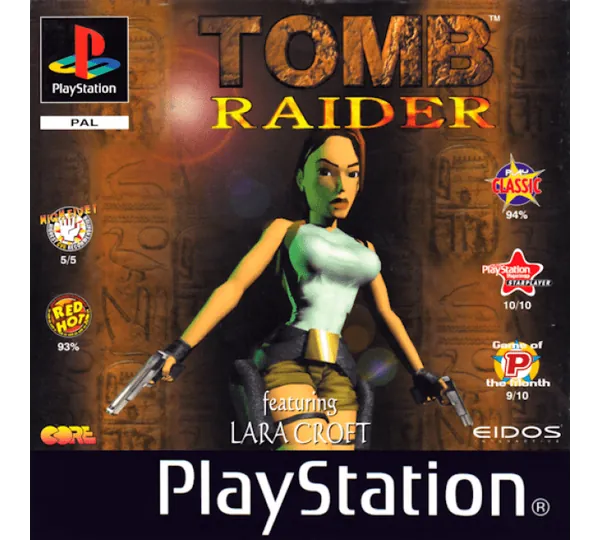
ToggleTomb Raider PS1 is the game that sent a posh British archaeologist into the ruins of the world with two pistols and a very sensible ponytail.
Core Design developed it and Eidos published it in 1996, and it introduced Lara Croft to the world. You explore ancient tombs across Peru, Greece, Egypt and the lost island of Atlantis, solving puzzles, jumping gaps and shooting anything that gets in your way. It is a third-person adventure that felt like nothing else on the PlayStation. In 2026, does Tomb Raider PS1 still raid a tomb in style, or has it been buried?
Gameplay: Climb, Shoot, and Solve
You guide Lara through huge, silent tombs, climbing ledges, pulling levers, finding keys and working out how to reach the next room. The controls are tank-style, so you turn on the spot and move forwards or backwards, and a jump is a careful, planned thing. The camera is third-person and follows over Lara’s shoulders, though you can take manual control when you need to.
The dangers are animals and creatures that you must kill, and there are hidden secrets in every stage that play a little tune and usually give you extra items. You pick up small and large medi-packs, ammunition, keys and artefacts to carry in your inventory. A training level in Croft Manor, available from the start menu, teaches you how everything works, and it is well worth a visit.
The Save Crystal Drought? The PlayStation version saves your progress using Save Crystals scattered through the levels, rather than letting you save at any point. That means a long run through a tricky section can end with one wrong jump and a trip back to the last crystal you found. It makes every gap and every wolf matter, and it can be maddening. Use the crystals, learn the jumps and be ready to try the same ledge a dozen times.
Graphics: Polygons in the Dark
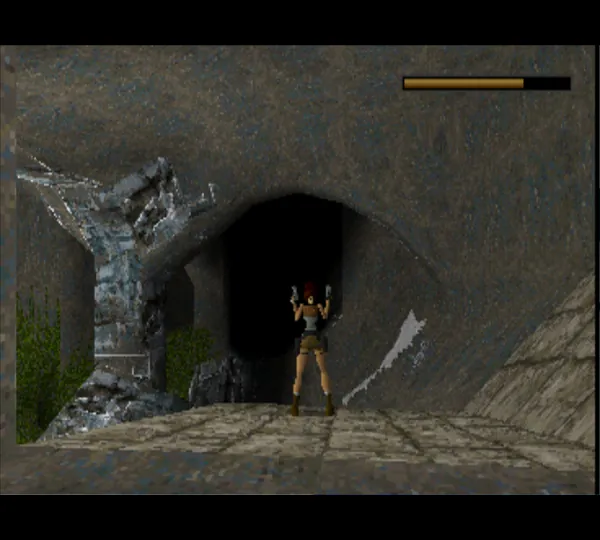
For 1996 the 3D worlds were astonishing. Tomb Raider gave you huge caverns, tall pillars and eerie caves with a real sense of scale, and Lara herself was one of the most recognisable characters of the PlayStation era. The title screen, with its glowing ring and Lara’s face, still looks dramatic.
Today the polygons are blocky and the textures wobble, and the world looks stark and angular. But the atmosphere is still there, and the grand, silent spaces have a lonely, spooky beauty. It has aged, but it has aged with dignity.
Sound: Silence and Surprises
The most striking thing about the sound is how little music there is. Nathan McCree composed a score that draws on English classical music, but it only appears at selected moments, and most of the game relies on ambient noises and action effects. The silence makes the tombs feel lonely and dangerous.
The footsteps, the splashes and the barking of animals are all convincing, and the tune that plays when you find a secret is a delight. It is a brave choice that works.
Replayability: A Tomb Worth Re-Raiding
Finding every secret is a challenge in itself, and each stage has hidden items that you might miss the first time. Going back to a level to hunt for the last secret is a good reason to replay.
It is a game for the patient. If you enjoy puzzles and exploration and you can put up with the tank controls, there is a lot to enjoy. If you want fast action, you may be tempted to put it back on the shelf.
The Retro Looney Verdict
Tomb Raider PS1 is atmospheric, adventurous and unforgettable, a game that made 3D exploration feel exciting and gave us a gaming icon. The secrets, the huge spaces and the lonely silence still pull you in.
Yes, the controls are stiff and the Save Crystals are hard to love. None of that spoils a landmark adventure. Take your time, check every corner and keep Lara’s feet away from the edge.
Don’t forget to check out my other PlayStation Reviews!

Media