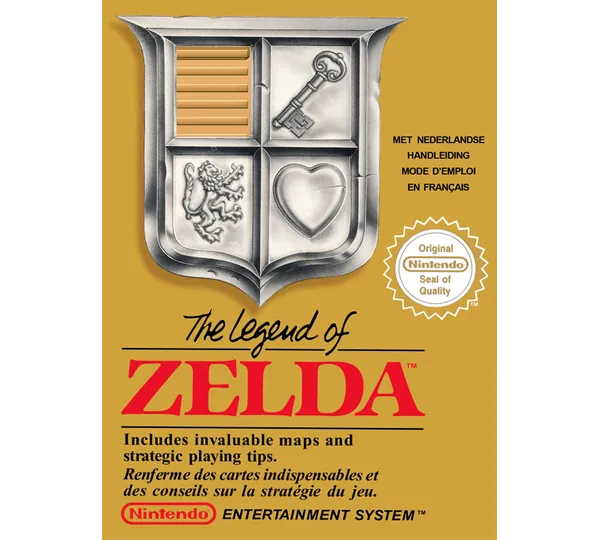

System: Nintendo Entertainment System
Release date: 1986
Post Contents:
ToggleThe Legend of Zelda NES is the game that gave you a sword, shrugged, and told you to go and find out for yourself.
Nintendo released it in 1986 in Japan and in 1987 in the West, with Shigeru Miyamoto and Takashi Tezuka behind it. You play Link, a boy with a tunic, a small shield and a hard stare, sent to gather eight pieces of the Triforce of Wisdom before Ganon finishes what he started in Hyrule. There is no hand-holding, no tutorial and no map marker, just a flip-screen overworld and a very tired old man in a cave. In 2026, does The Legend of Zelda NES still reward the brave, or has it wandered off the edge of the map?
Gameplay: Wander, Burn, and Bomb
Everything starts in a cave, where an old man hands over a wooden sword and then leaves you to it. The overworld is seen from above, one screen at a time, and nearly every screen is hiding something: a cave, a shopkeeper, a heart container or a secret staircase under a rock. Rupees buy you shields, potions and keys, and the items you find change how you travel. The boomerang stuns enemies, the raft crosses the water and the recorder whisks you back to a dungeon entrance.
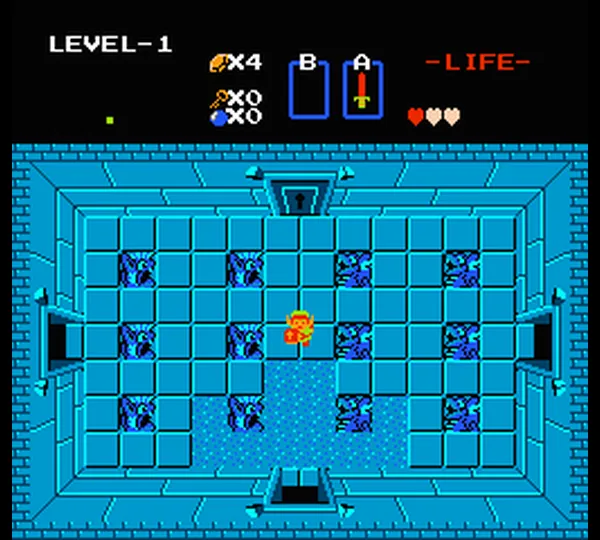
The eight dungeons are the heart of it. Each is a maze of locked doors, pushable blocks, keys, a map, a compass and a boss waiting at the end, and the guardian monsters range from the horned Aquamentus to the grumpy Dodongo that only eats bombs. Find all eight pieces of the Triforce, march into the ninth dungeon and take on Ganon with a Silver Arrow. Your hearts are your health, and the battery in the cartridge means you can save your adventure and stop for tea.
The Blind Bombing? The game never tells you which walls are cracked, which bush will burn or which rock hides a staircase. So you spend your life walking into every wall, bombing every tree and torching every bush in the hope that something opens. I have lost whole evenings to a screen that held nothing at all. Keep a notepad handy, or accept that your best weapon in this game is stubbornness.
Graphics: Green Fields, Red Octoroks
For 1986 it was a proper big world. The flip-screen overworld packs in forests, lakes, graveyards, deserts and mountains in bright blocks of green, brown and blue, while the dungeons use a handful of colours and still manage to look properly sinister. Link is a tiny sprite, but you always know which way he is facing and what is about to hit him.
It is plain by today’s standards, with a lot of the same trees and rocks repeating across the map. Yet the clean shapes and bold colours mean everything is readable at a glance, and the sprites have a charm that no modern remake has quite matched. The red Octoroks alone feel like old friends.
Sound: The Tune You Whistle Walking Home
Koji Kondo’s overworld theme is the sort of music that has you humming it at the bus stop. It is bold, bouncy and adventurous, and it kicks in the moment you leave the cave. The dungeon theme is moodier and slower, and it does exactly what it should: it makes you nervous.
The effects are simple but they stick. The jingle for a secret, the chime when your hearts are full and the little fanfare when you grab a treasure are all part of the game’s language. You learn to listen for the secret-door sound, and it is oddly satisfying every time.
Replayability: A Quest Worth Doing Twice
Finish the game and you unlock the Second Quest, which keeps the same world but moves the secrets, changes the dungeons and fills them with tougher enemies. It is a proper second helping, and it asks for everything the first run taught you. You can also go back for the heart containers you missed, since the map is vast and there is always another corner you have not tried.
This is a game for the patient explorer, who enjoys the thrill of finding something nobody told them about. If you like to be pointed at the next objective, you may get frustrated. But the joy of working it out is a rare thing, and it hasn’t faded.
The Retro Looney Verdict
The Legend of Zelda NES is bold, mysterious and generous, an adventure that trusts you to explore, to fail and to find your own way. The dungeons, the secrets and that overworld theme still feel fresh, and the whole thing rewards curiosity in a way few games have managed since.
Yes, the secrets can be cruel, and the lack of hints will send some of you to the internet. None of that changes how special the first trip across Hyrule feels. Take the sword, light the bushes and get lost on purpose.
Don’t forget to check out my other NES Reviews!

Media