
System: Nintendo Entertainment System
Release date: 1989
Post Contents:
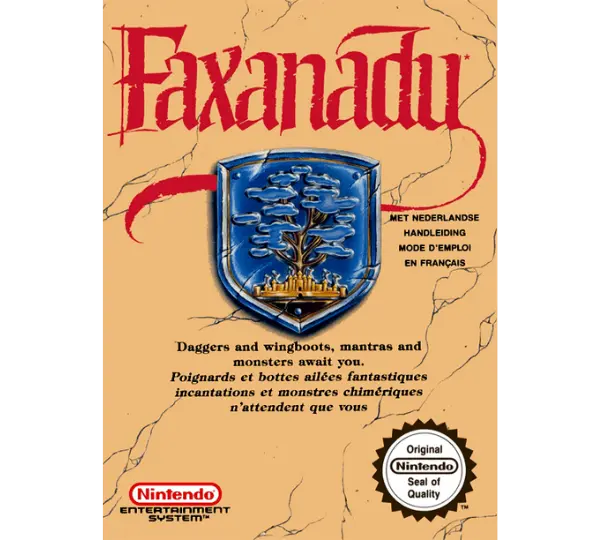
ToggleFaxanadu on the NES is the game that proves the side-scrolling action RPG was capable of genuine ambition long before anyone invented the phrase “Metroidvania.”
This Faxanadu title dropped you into a dying World Tree, handed you a sword, a handful of gold, and an increasingly grim quest to find out what was killing everything, and trusted you to figure the rest out yourself. Part action game, part RPG, and entirely its own strange thing – Faxanadu never quite sounds like anything else when you try to describe it to someone who hasn’t played it. In 2026, does this Faxanadu NES curio still cast its peculiar spell, or has the World Tree finally withered for good?
Gameplay: Climb the Tree, Find the Evil, Try Not to Run Out of Gold
The game sends you upward through the enormous World Tree as a wandering warrior returning to his hometown to find it in ruins and the tree itself dying from some unknown corruption. The structure is side-scrolling action with genuine RPG depth underneath – you level up by defeating enemies, buy equipment from shops scattered through the tree’s many towns, manage a mana bar for magic, and navigate a world that opens up gradually as your capabilities improve.
Towns punctuate the climb with shops, inns for saving your progress – which requires paying a Guru for your password, a wonderfully mercenary system – and NPCs who drop hints about what’s ahead. Equipment upgrades are genuinely meaningful, the difference between an iron sword and a better one is immediately felt, and managing gold between towns adds real weight to combat encounters that might otherwise feel routine.
The world design is genuinely impressive for 1989 – distinct visual zones as you climb higher through the tree, enemy types that telegraph the increasing hostility of the upper reaches, and a sense of place that makes the World Tree feel like somewhere real rather than a series of identical corridors.
The Guru’s Password? The patience this game requires will strike modern players as either characterful or deeply frustrating depending entirely on their disposition. The password save system through the Guru is charming in theory and genuinely annoying in practice – you cannot save wherever you like, you pay gold to do it, and dying without a recent password means retracing steps through sections you’d already cleared. The game is also not especially forthcoming about where to go next, and without a map the vertical structure of the World Tree can produce confusing circular wandering when a new area hasn’t been properly explored. Some enemy placements are specifically designed to punish careless movement through sections you’ve already been through, which is either clever design or deeply unkind depending on the moment.
Graphics: Dark Wood, Darker Depths
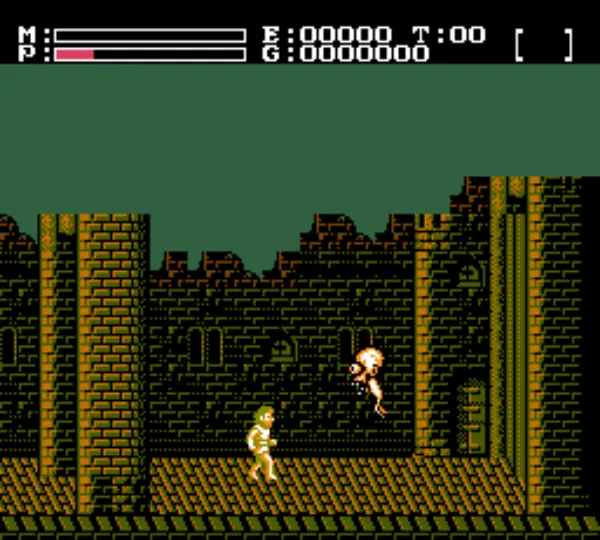
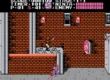
The visual identity here is genuinely unlike most of the NES’s contemporaries. The World Tree’s interior is all dark wood, organic shapes, and a brooding colour palette that shifts convincingly as you climb – the lower sections have a dim, earthy quality while the upper reaches introduce more hostile, alien environments that feel genuinely different rather than simply recoloured.
Character sprites are clean and expressive given the hardware constraints, enemy designs are varied and memorable, and the towns have enough architectural detail to feel inhabited rather than simply functional. The whole thing has a moody, slightly melancholic atmosphere that suits the dying-world premise perfectly and has aged into something that reads as distinctive rather than simply old.
Sound: Brooding Tunes for a Brooding World
The soundtrack deserves considerably more recognition than it typically receives. Composed by Mikio Saito, the music matches the game’s tone precisely – brooding, slightly melancholic town themes that feel like a world that knows it’s in trouble, urgent combat music that builds tension without becoming exhausting, and atmospheric dungeon tracks that make the hostile upper reaches of the tree feel genuinely threatening.
Sound effects are crisp and functional throughout – sword strikes, magic casts, and enemy deaths all register cleanly without cluttering the audio space the music needs. Understated and quietly excellent in a way that rewards attention rather than demanding it.
Replayability: A Tree Worth Climbing Again
The replay value here works the way good action RPGs tend to – different equipment approaches, more efficient routing once the world layout is understood, and the simple pleasure of revisiting a game whose atmosphere you found compelling the first time around.
The relatively linear structure means repeat runs move faster as familiarity builds, and the RPG systems provide enough variation in approach that going back with a different equipment strategy feels meaningfully different. Not endlessly deep, but the kind of game you return to every few years and find yourself surprised by how well it holds together.
The Retro Looney Verdict
Strange, atmospheric, occasionally awkward, and completely unlike anything else on the platform – this Faxanadu NES release asks more of you than most NES titles were willing to, trusts you to explore and experiment without hand-holding, and wraps a genuinely compelling world in just enough RPG depth to make the journey feel meaningful rather than simply mechanical.
The password system will test your patience at least once and the lack of direction will have you wandering when you’d rather be progressing. None of that diminishes what it achieves – a properly atmospheric action RPG on 1989 NES hardware that still casts a peculiar spell thirty-five years later. One of the system’s great overlooked gems. Climb the tree, pay the Guru, and find out what’s killing everything.
Don’t forget to check out my other NES Reviews!

Media