
System: Nintendo 64
Release date: 1998
Post Contents:
ToggleThe Legend of Zelda: Ocarina of Time N64 is the game that gave a boy in a green hat a talking fairy, a time machine shaped like a musical instrument and a very large field to get lost in.
Nintendo’s 1998 adventure takes Link from a quiet forest village to a Hyrule threatened by Ganondorf, the Gerudo king who wants the Triforce, with Princess Zelda sending you off to gather the Spiritual Stones. It was the series’ leap into three dimensions, and it made the jump with the confidence of a boy who has never fallen off a horse. In 2026, does The Legend of Zelda: Ocarina of Time N64 still play the right tune, or has it lost its rhythm?
Gameplay: Target, Slash, and Play
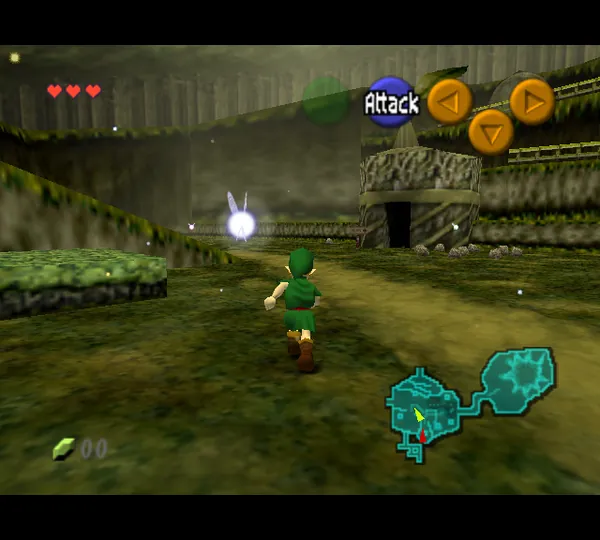
The big idea is Z-targeting. Hold the button and Link locks on to an enemy, circling and dodging around it with his sword and shield, and your arrows and other projectiles aim themselves at the target. It sounds simple, but it made three-dimensional combat feel natural, and the fairy Navi hovers nearby to explain things and, occasionally, to shout “Hey!” at the worst possible moment. The buttons are context-sensitive too, so one press can open a door, push a block or climb a ledge depending on what you are standing in front of.
The structure is the other big trick. Hyrule Field is the central hub, linking forests, mountains, deserts and lakes, and a pile of dungeons, including the Forest Temple and Fire Temple, each have their own puzzle and boss. Link learns twelve ocarina melodies that solve musical puzzles and teleport him to places he has visited, and pulling the Master Sword from its pedestal sends him seven years into the future as an adult. Young and adult Link have different abilities, and later you can hop between the two periods.
The Water Temple? Here it comes: the dungeon where you raise and lower the water level, swap your heavy boots on and off, and wander in circles trying to remember which door goes where. The temple has a reputation for turning a nice afternoon into a sulk. My advice is to take notes, take a break, and avoid the temptation to leave the pad on the stairs.
Graphics: A Polygon Playground
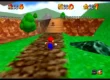
On the Nintendo 64 this was a revelation. Real-time 3D polygons, a long draw distance and a huge, varied world made it one of the most ambitious games of its day, with a day-and-night sky that gave Hyrule real atmosphere.
Today the characters are angular, the textures are muddy and the frame rate can wobble, but the art direction is strong enough to carry all of it. It has aged, but it has aged with dignity.
Sound: Songs You Play Yourself
Koji Kondo’s music is a delight. Each area and character has its own theme, from the cheerful bounce of the village to the mysterious hush of the forest, and many tunes are woven from the ocarina melodies you learn yourself. Playing a little song on a pretend instrument and watching the world change is a lovely idea, and the music makes it work.
The effects are charming, but the samples are a little dated, as you would expect from a cartridge from the late nineties, but the tunes are so strong that they stick in your head for years.
Replayability: A World Worth Revisiting
There is plenty to do beyond the main quest. A long trading sequence of ten items ends with the Biggoron Sword, there are horse trips and mini-games to wander off to, and the two time periods mean you are always thinking about what you can do now that you could not do before. A second run, with the world’s secrets in mind, is a pleasure.
The main adventure can take a good few evenings, and it never overstays its welcome.
The Retro Looney Verdict
The Legend of Zelda: Ocarina of Time N64 is brilliant, big-hearted and endlessly clever, a game that made 3D adventure feel easy and magical. Z-targeting, the time travel and the music all combine into something that still feels special.
Yes, the Water Temple is real, and the rough polygons will not win any beauty contests. None of that matters when the adventure is this good. Learn the songs, keep your boots handy and go and say hello to Ganondorf.
Don’t forget to check out my other N64 Reviews!

Media