
System: Sega Master System
Release date: 1988
Post Contents:
ToggleShinobi Master System is the game that asked what a ninja would do if he had to rescue a street full of hostages before tea.
Sega brought its arcade ninja to the Master System in 1988, and the little black box did a decent job of squeezing a whole city of thugs, gunmen and bosses into a cartridge. You play a lone ninja, you throw shurikens, you punch and kick, and you save as many kidnapped people as you can find. It is a side-scrolling action game with a proper sense of purpose. In 2026, does Shinobi Master System still slip silently past the guards, or has it been caught in the spotlight?
Gameplay: Throw, Punch, and Rescue
You run and jump through the stages, firing shurikens at range and switching to punches and kicks when somebody gets too close. The Master System version is kinder than the arcade original, because you have a health gauge instead of dying to a single hit. That small change makes it far more playable at home, where nobody has a pocket full of 10p pieces.
The hostages are the clever part. Rescuing them is optional, but each one you free upgrades your close-range and long-range weapons and tops up or expands your health gauge. Certain hostages unlock the bonus stages, which are tucked in after the regular stages and hand out your ninja magic. It gives you a reason to explore every corner rather than sprint to the end.
The Missed Hostage? Because the hostages are optional, it is easy to run straight past one and only learn the price later. Miss the right ones and you lose the weapon upgrades, the bigger health gauge and the bonus stages, and the later bosses become far harder to beat. There is no warning when you have skipped something important. Take your time, check behind the crates and treat every captive as a power-up in a headscarf.
Graphics: Crates, Thugs, and Bold Colours
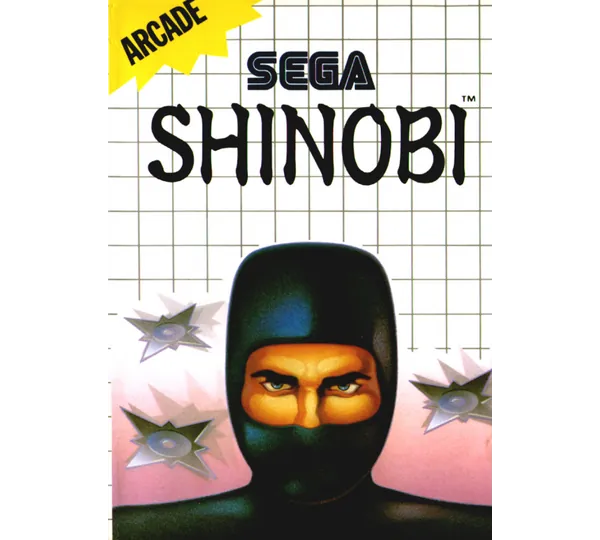
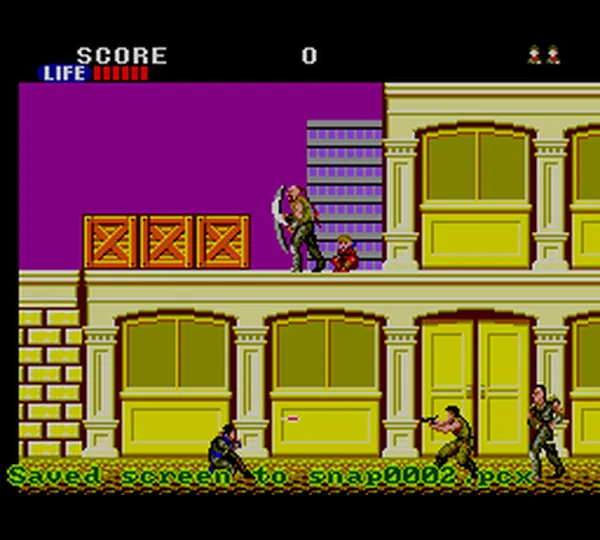
The Master System gives you bright, chunky sprites, and the stages are packed with crates, windows and street scenery. The big title screen, with its ninja face glaring out from behind red lettering, sets the tone nicely. The characters are clear and easy to read, which matters when the screen fills with gunmen.
It is not as flashy as the arcade, and the scrolling does flicker a little when the action gets busy. Even so the art holds up well, and the sprites have a neat, cartoony charm. It looks like a Master System game that knew exactly what it could do and got on with it.
Sound: Chirpy Tunes and Sharp Clangs
The music is the usual Master System mix of bouncy, chirpy melodies that keep the pace up, with a tune that suits the mood of sneaking and fighting. It is not a soundtrack you will hum on the bus, but it fits the action and never drags.
The effects are crisp, with sharp throws and thumping punches, and they give each hit a satisfying snap. I would not turn the sound off, though it is hardly the star of the show.
Replayability: A Rescue Worth Repeating
Once you know where the hostages are, a second run feels like a different game, because you can plan your upgrades and aim for the bonus stages. Chasing a full health gauge and every captive gives you something to improve on each time.
It is a short game for the patient and a decent challenge for the impatient. If you enjoy learning a stage until you can play it with your eyes shut, you will get plenty out of it.
The Retro Looney Verdict
Shinobi Master System is quick, tidy and satisfying, a fine conversion that swaps the arcade’s one-hit death for a health gauge and a good reason to look around. The hostages, the shurikens and the bonus stages make it a short, sharp pleasure.
Yes, you can miss a hostage and pay for it later, and the flicker is real. None of that spoils a very enjoyable ninja outing. Rescue everyone, keep your distance and keep a shuriken for the boss.
Don’t forget to check out my other Master System Reviews!

Media