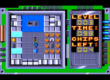

System: Atari Lynx
Release date: 1989
Post Contents:
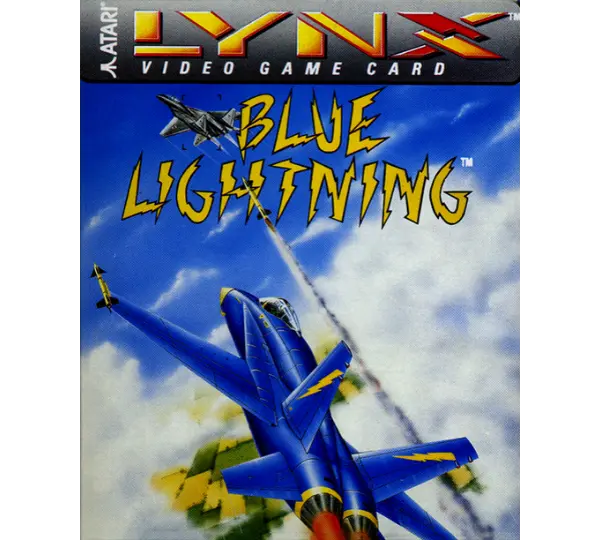
ToggleBlue Lightning on the Atari Lynx is the game that Atari bundled with the handheld to show the world exactly what a colour portable could do – and in 1989, it absolutely delivered the goods.
This Blue Lightning title is a behind-the-plane combat flight game in the spirit of Afterburner – you’re a fighter pilot cutting through enemy formations, dodging missiles, strafing ground targets, and trying to stay alive long enough to see the mission complete screen. It was ambitious, fast, and looked like nothing else on a handheld in 1989. In 2026, does this Blue Lightning Atari Lynx launch classic still take to the skies, or has it finally been grounded?
Gameplay: Lock On, Light Up, Get Out Alive
Blue Lightning sends you into the cockpit of a fighter jet across a series of missions that task you with destroying enemy aircraft, ground installations, vehicles, and the occasional boss-level target before your fuel or your luck runs out. The core loop is satisfying and immediately accessible – you have a lock-on targeting system for air-to-air missiles, a cannon for ground targets, and the constant need to balance aggressive offensive play with not getting boxed in by the stream of incoming fire.
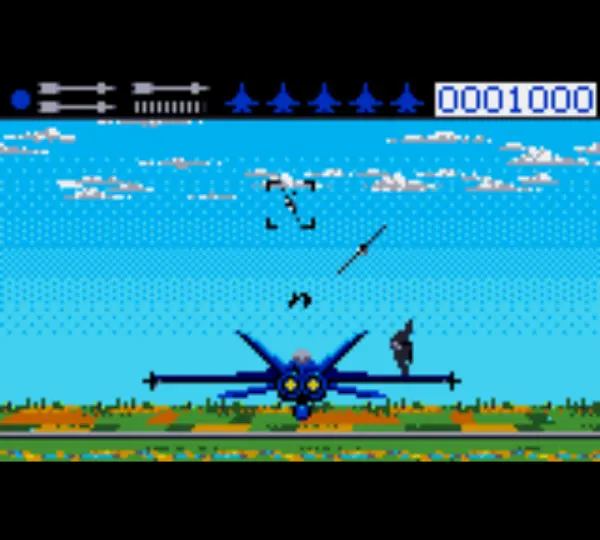
The behind-the-plane perspective gives everything a real sense of speed as terrain scrolls beneath you and enemy formations peel off in multiple directions. Barrel rolls dodge incoming missiles, throttle control lets you close on targets or pull back from danger, and the variety of mission objectives – different enemy types, weather conditions, night missions – keeps the campaign from settling into routine.
As a technical showcase for the Lynx’s scaling hardware it remains impressive. The pseudo-3D terrain effect and the way aircraft and ground targets scale convincingly as they approach is exactly the kind of thing that made jaws drop at the Lynx counter in Toys R Us in 1989, and it holds up better than you might expect.
The Missile Lock? Blue Lightning asks for a degree of patience that its fast-paced presentation doesn’t always prepare you for. The targeting system requires you to hold position behind enemies long enough to achieve lock, which leaves you stationary and exposed at exactly the moments when incoming fire is most dangerous. Difficulty escalates sharply in the middle missions and the later stages introduce enemy density that can overwhelm before the screen has given you enough warning to react. Lives are limited, continues are finite, and the gap between a clean mission completion and a grinding restart can come down to a single missile you didn’t see in time. Satisfying when it clicks, occasionally brutal when it doesn’t.
Graphics: A 1989 Handheld That Punched Well Above Its Weight
The visuals are the reason Blue Lightning existed as a launch title and they still carry genuine technical charm. The terrain scaling effect beneath your aircraft creates a convincing sense of altitude and speed, enemy aircraft and ground targets scale smoothly as you close the distance, and the colour palette shifts effectively between mission environments – daylight desert runs look distinct from night missions or overcast coastal operations.
The explosion effects are pleasingly chunky, the aircraft animations are smooth and readable, and the whole thing moves with a fluidity that was genuinely remarkable for a handheld in 1989. By modern standards it’s abstract, but as a piece of hardware demonstration it still communicates exactly what it set out to.
Sound: Engines, Explosions and Combat Radio
The audio package matches the visual ambition throughout. Engine sounds build convincingly with throttle changes, missile lock tones create genuine tension when enemies are closing, and explosions land with satisfying weight. The music is driving and urgent without ever becoming intrusive – background presence rather than foreground distraction, which is exactly right for a game that demands constant visual attention.
Sound effects do excellent work communicating information as well as atmosphere – the lock-on warning, the incoming missile alert, the mission complete fanfare all register immediately and cleanly. For Lynx audio it’s a polished and purposeful effort.
Replayability: One More Mission, One More Run
The replay value here is honest and straightforward. Multiple difficulty settings give returning players something to aim for once the standard campaign has been cleared, and the mission structure is punchy enough that individual runs feel satisfying without demanding a large time commitment.
Score chasing and the challenge of clean mission completions with minimal damage give dedicated players clear goals, and the variety across the campaign’s mission types means the experience doesn’t collapse into repetition as quickly as a single-environment shooter might. A natural fit for the Lynx’s on-the-go play style.
The Retro Looney Verdict
Blue Lightning is exactly what a launch title should be – a confident technical showcase that also happens to be a genuinely enjoyable game. Atari needed something that would make people pick up the Lynx and understand immediately why a colour handheld with scaling hardware mattered, and this delivered that brief completely.
The targeting system’s patience requirement and the sharp late-game difficulty will test newcomers, and by modern standards the whole thing is over quickly. None of that changes the fact that this Blue Lightning Atari Lynx title is still a fun, fast, and technically impressive piece of 1989 handheld gaming that earns its place in any Lynx collection. Strap in, find your targets, and mind the incoming.
Don’t forget to check out my other Lynx Reviews!

Media