
System: Nintendo Game Boy
Release date: 1993
Post Contents:
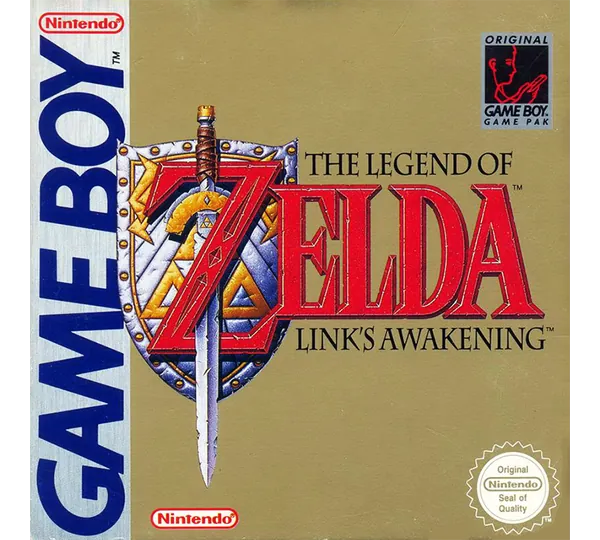
ToggleThe Legend of Zelda: Link’s Awakening Game Boy is the game that asked what happens if you take a whole Zelda adventure and squeeze it onto four shades of pea soup.
Nintendo’s 1993 handheld outing has no Hyrule, no Zelda and no Triforce. Instead Link is shipwrecked on Koholint Island, patched up by a girl called Marin, and told that the only way home is to wake a giant flying fish by collecting eight musical instruments. It sounds daft, and it is, in the best possible way. In 2026, does The Legend of Zelda: Link’s Awakening Game Boy still sing, or has it drifted back off to sleep?
Gameplay: Explore, Dig, and Dream
You start with nothing, find your sword lying on the beach, and the island slowly unfolds from there. It is a top-down adventure of villages, forests, caves and mountains, split into eight dungeons that run from the Tail Cave to Turtle Rock. Each dungeon hands you a new gadget: the Power Bracelet for lifting rocks, the Pegasus Boots for sprinting, Magic Powder, a Hookshot, a Bow and the brilliant Roc’s Feather, which lets Link jump and turns some rooms into little side-on platform puzzles.
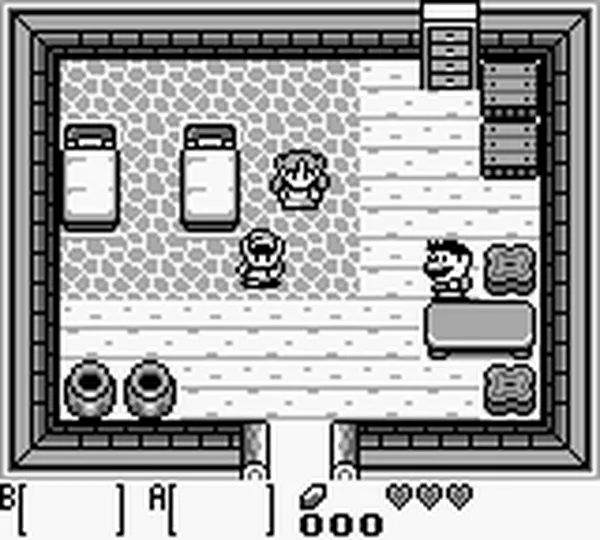
The bosses are a proper parade, from the bouncing Moldorm to the Evil Eagle at the top of its tower, and every dungeon has a small boss waiting before the big one. Between them the island is full of oddities: Mabe Village, Goombas and a Chain Chomp wandering in from another Nintendo universe, and a shop where robbing the shopkeeper has consequences you will never forget. The Ocarina’s songs add little puzzles of their own.
The Two-Button Juggle? The Game Boy only has an A button and a B button, so your sword, shield, bracelet, feather and everything else have to fight over two slots. You spend a ridiculous amount of time in the pause menu swapping gear, and mid-boss-fight is not the moment to be fumbling for your Bow. It is a small price for an adventure this big, but leave your patience in the dungeon.
Graphics: Green Screen, Big Ideas
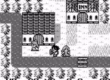
On the original Game Boy everything is four shades of grey-green, and Link’s Awakening still makes it look bigger than it has any right to. Houses, caves and mountainsides are crammed with detail, the screen scrolls smoothly from room to room, and the dungeons are full of tiles that tell you at a glance what is a wall, a pit or a switch.
Today it is still charming. The character sprites have real personality, the boss designs are big and bold, and the odd cameo makes you grin. Yes, the screen is small and you will want good light and a steady hand, but the artists have squeezed a lot from very little.
Sound: Ballads Worth Humming
The music is a real strength. Every area has its own tune, from the bouncy village theme to the tense dungeon pieces, and there is a gentle sadness running underneath it that fits the dreamy story. The Ballad of the Wind Fish, which you play on the Ocarina, is the sort of tune that ends up in your head on the bus.
The effects are crisp and satisfying too. The slash of the sword, the clunk of a switch and the little chime when you find a secret all tell you something good has just happened. The Game Boy’s tiny speaker is not kind to it, but a pair of headphones makes a big difference.
Replayability: One More Seashell
Once the Wind Fish is awake there is still plenty left on the island. Heart Pieces are tucked away in odd corners, Secret Seashells are hidden all over the place and there is a long trading sequence where you swap one daft item for another until something useful turns up at the end. Going back with the Roc’s Feather and the Hookshot to places that stumped you earlier is a pleasure.
The adventure itself is not enormous, and once you know the dungeons you can fly through it in an afternoon. But it is a game you will happily come back to every few years, and it is a perfect first Zelda for anybody who thinks the series is too huge to start.
The Retro Looney Verdict
The Legend of Zelda: Link’s Awakening Game Boy is clever, charming and unexpectedly moving, a handheld adventure that never feels like a cut-down version of anything. The island is a joy to explore, the dungeons are well built and the music stays with you long after you have switched off.
Yes, the two-button juggle is real, and the monochrome screen will test your eyes on a dark train. None of that stops it being one of the best things Nintendo ever put in your pocket. Collect the instruments, mind the shopkeeper, and think carefully before you wake the Wind Fish.
Don’t forget to check out my other Game Boy Reviews!

Media