System: Nintendo Game Boy
Release date: 1992
Post Contents:
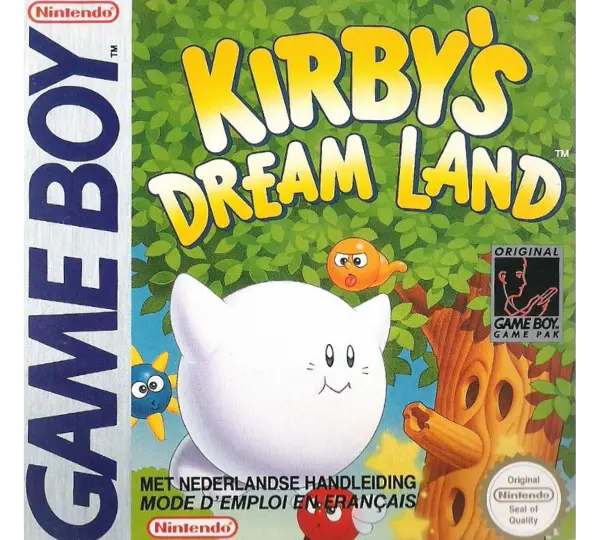
ToggleKirby’s Dream Land on the Game Boy is the game that introduced the world to gaming’s most cheerful little pink puffball – and thirty years on, absolutely nobody has managed to make anything quite that likeable since.
This Kirby’s Dream Land title arrived on a grey brick screen already dominated by Tetris and Mario spin-offs, and somehow carved out its own instantly recognisable identity anyway. Kirby wakes up to find King Dedede has stolen all the food from Dream Land, and sets off across five bright, breezy stages to sort it out – inhaling enemies, floating over hazards, and generally being the most agreeable protagonist the Game Boy ever produced. In 2025, does this Kirby’s Dream Land Game Boy debut still float along nicely, or has the puff finally gone out of it?
Gameplay: Inhale, Float, and Smile
Kirby’s Dream Land on the Game Boy is deliberately, refreshingly simple compared to most of its platforming contemporaries. Kirby can inhale enemies and spit them back out as projectiles, or simply float indefinitely by puffing himself up with air – a movement option that removes the fear of bottomless pits almost entirely and makes the whole experience feel gentle and welcoming rather than punishing.
Notably absent here is the copy ability that would define later Kirby games – inhaled enemies are simply ammunition, nothing more. That keeps things straightforward, but it also means the combat variety stays fairly limited throughout the five main stages. Each level is short, breezily paced, and stuffed with secret rooms and hidden extra lives for players willing to poke around rather than beeline for the exit.
The Short Puff? Kirby’s Dream Land on the Game Boy is a genuinely brief experience – a confident player can see the credits inside thirty minutes on a first attempt, and even a thorough exploration run won’t stretch much past an hour. The lack of the copy ability means the moment-to-moment gameplay stays fairly one-note across all five stages, and the difficulty is deliberately gentle throughout, right up until an Extra Game mode unlocks after completion and finally applies some proper pressure. It’s a game built entirely around accessibility and charm rather than challenge, which some players will find a genuine limitation.
Graphics: Simple, Bright, and Full of Character
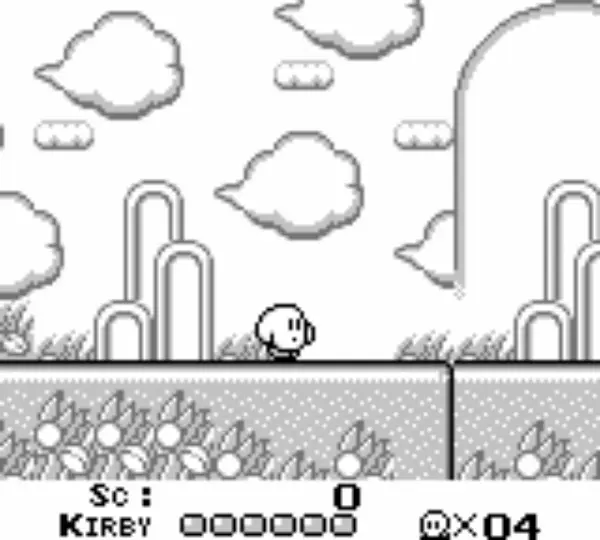
Kirby’s Dream Land on the Game Boy makes excellent use of the hardware’s monochrome screen. Kirby himself is instantly expressive despite being a simple round shape – his puffed-out inhale animation, his satisfied little smile, the way he bobs along mid-flight all communicate personality far beyond what the pixel count should allow.
Dream Land’s five worlds are cleanly designed and easy to read even on the small screen, with enough visual variety across grassy fields, ice caverns and factory interiors to keep things feeling fresh despite the brief runtime. Boss designs, particularly King Dedede himself, carry real character and remain instantly recognisable Nintendo icons to this day.
Sound: Cheerful Tunes That Stick
The soundtrack on Kirby’s Dream Land on the Game Boy is relentlessly upbeat and catchy in a way that suits the character perfectly. Green Greens, the very first stage theme, has gone on to become one of gaming’s most enduringly recognisable melodies, remixed across Kirby games for decades since.
Sound effects are simple but satisfying – the inhale sound, the pop of a spat-out enemy, the cheerful little jingle on level completion all reinforce the game’s warm, welcoming tone. Nothing here overstays its welcome across the game’s short length, and the whole audio package matches Kirby’s personality note for note.
Replayability: A Dream Worth Revisiting
Kirby’s Dream Land on the Game Boy earns genuine replay value through its post-completion Extra Game mode, which ramps up the difficulty considerably and gives the experience real teeth for the first time. Hunting down hidden rooms and secret extra lives across a second playthrough also reveals content easily missed on a first rush through.
Given how short each run is, it’s an easy game to return to for a quick session, and the charm holds up well enough across repeat plays that it rarely feels like a chore.
The Retro Looney Verdict
Kirby’s Dream Land on the Game Boy is breezy, joyful, and instantly likeable in a way that few games manage on any hardware, let alone a monochrome handheld from 1992. It doesn’t have the depth or copy-ability variety that later series entries would introduce, and it’s a genuinely short experience by any measure.
None of that stops this Kirby’s Dream Land Game Boy classic from being an absolute delight to play – accessible, charming, and the confident debut of one of Nintendo’s most enduring characters. Grab the grey brick, inhale a Waddle Dee, and enjoy one of the friendliest games the Game Boy ever produced.
Don’t forget to check out my other Game Boy Reviews!

Media