If you grew up in the 90s like me, you’ll remember the playground politics. Forget real world elections – they didn’t matter. This was far more serious business.
You were either Team Sega or Team Nintendo, and there was absolutely no sitting on the fence. Fence‑sitters were treated with suspicion at best and outright ridicule at worst. This was the console war, and every kid was drafted whether they liked it or not. Lunchtime debates raged on well beyond the sound of the bell, with passionate arguments over blast processing versus Mode 7, Sonic versus Mario, and which console had the better games.Allegiances were fierce. Insults were thrown. Friendships were tested. Careers as amateur lawyers were born as kids desperately tried to justify why the console *they didn’t own* was actually rubbish anyway. All of it over plastic cartridges, chunky controllers, and 16‑bit bragging rights.
Setting the Scene: When Sega Was Actually Cool
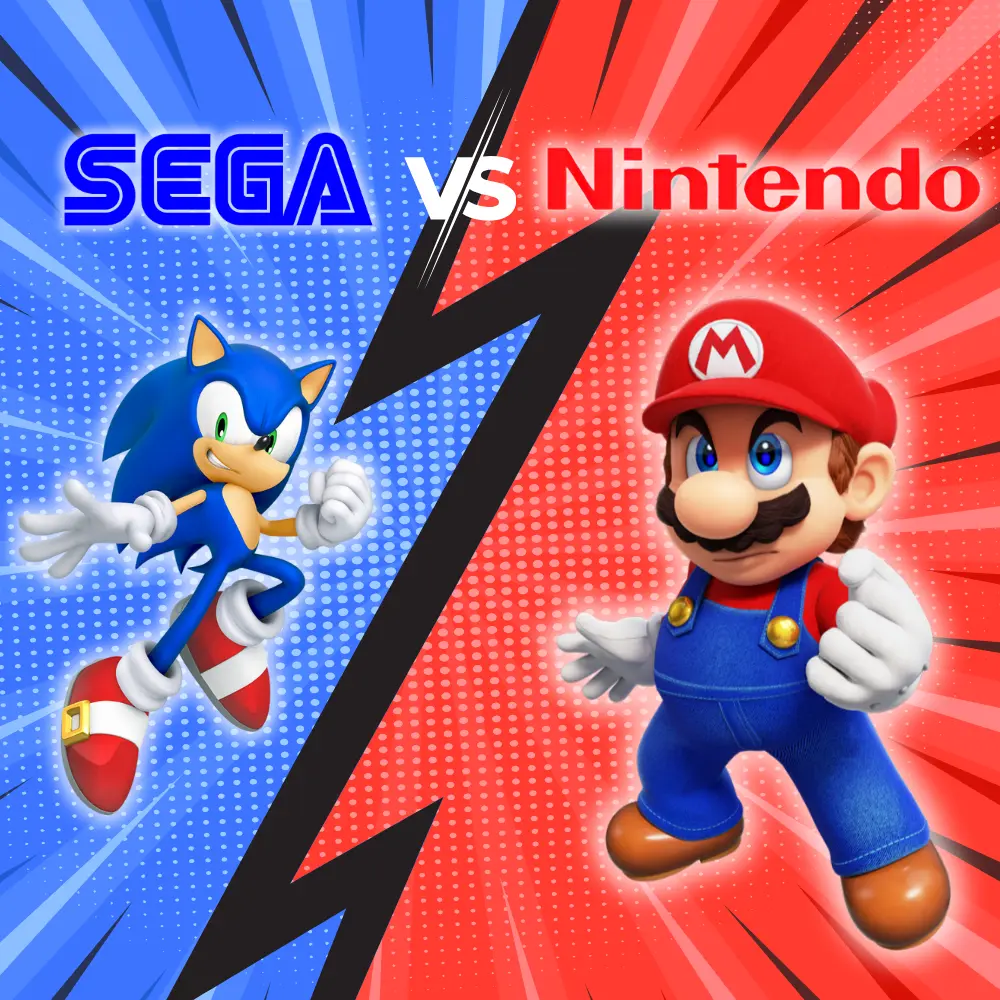
The Sega vs Nintendo console war did not politely arrive in the early 90s. It kicked the door in, knocked over the furniture, and demanded your attention. Sega burst onto the scene with the Mega Drive, louder, faster, and far more aggressive than anything else on offer in the UK. This was the moment the console war stopped being polite and started being personal.
Sonic the Hedgehog was not just a mascot in the Sega vs Nintendo rivalry. He was Sega’s blue, spiky statement piece, shouting speed, attitude, and the idea that Nintendo was for kids who still asked permission before staying up late. In the console war, Sonic did not explain himself – he showed up and sprinted past the competition.
Nintendo, meanwhile, entered the Sega vs Nintendo console war already holding most of the market like a smug cat with a bird. Dependable, polished, and quietly confident, Nintendo was the sensible option. The Toyota Corolla of gaming. It worked, it always worked, and it did not need to shout about it. While Sega revved the engine and dared you to race, Nintendo simply smiled and kept winning.
By the early 90s, the console war had become part of everyday gaming life, with Sega vs Nintendo arguments playing out in schoolyards, magazines, and living rooms across the country.
Sega: Pros and Cons of the Cool Kid With Chaos Issues
Pros:
- Speed and Attitude: Sonic brought pure speed and unapologetic 90s swagger. He did not walk, he did not jog – he blasted through levels like he was late for something important.
- Aggressive Marketing: Sega did not advertise politely. They poked Nintendo in the ribs repeatedly, fuelling the Sega vs Nintendo console war with every advert.
- Mega Drive Hardware: It felt fast, arcade-like, and just a bit more grown-up than the competition, even when it really was not.
Cons:
- Too Many Add-ons: Mega CD, 32X, then the Saturn turning up early like an unwanted guest. Confusing does not even begin to cover it.
- Saturn Chaos: Surprise release, awkward design, expensive price. Sega more or less lobbed it into the wild and hoped for the best.
- Missed Tech: Passing on what became the PlayStation and Nintendo 64 remains one of the biggest oops moments in console war history.
Nintendo: Pros and Cons of the Family Favourite
Pros:
- First-Party Royalty: Mario, Zelda, Metroid. Nintendo had characters strong enough to carry a console on their own throughout the console war.
- SNES Strength: Better sound, richer visuals, and some of the tightest game design around.
- Brand Power: While Sega shouted, Nintendo quietly dominated the console war scoreboard.
Cons:
- Late to 16 bit: Nintendo took its time while Sega grabbed the early console war headlines.
- Cartridge Commitment: Sticking with cartridges scared off developers faster than a suspect kebab after closing time.
- Not as Cool: In the 90s, being family friendly was hardly edgy.
AAA Face-offs: The 90s Showdowns
Sonic the Hedgehog (Mega Drive) vs Super Mario World (SNES)
- Sonic: Immediate impact. Speed, colour, and attitude poured out of the screen.
- Mario World: Quietly perfected platforming and then showed everyone how it was done properly.
Verdict: Sonic for raw wow factor, Mario for depth. Chaos or craftsmanship defined the Sega vs Nintendo console war.
Street Fighter II
- SNES: Better sound, better colours, closer to the arcade.
- Mega Drive: Faster, but sounding like the speakers were hiding under the sofa.
Winner: SNES. Even die-hard Sega kids quietly knew it during the console war.
Who Stumbled Into The 2000s Better: The Verdict
Short answer – Nintendo.
Sega’s Dreamcast was brilliant, bold, and then sadly abandoned as the console war shifted into a new era. Nintendo kept going, quietly surviving and eventually thriving.
Final Thoughts: A War That Never Really Ended
Fire up Sonic or Mario today and the console war energy hits instantly. Sega may have bowed out of the hardware race, but the rivalry still lingers.
The Sega vs Nintendo console war was never just about games. It was about identity, loyalty, and arguing far too passionately about bits of plastic. And honestly, we would not have it any other way.
Looking back now, the console war between Sega vs Nintendo defined an entire generation of gaming, shaping tastes, loyalties, and playground arguments that still echo today.
For many players, the console war was defined by Sega vs Nintendo debates that felt just as important as the games themselves.