
System: Sinclair ZX Spectrum
Release date: June 1983
Descend into the deadly caverns of early British gaming history with Manic Miner on the ZX Spectrum, the June 1983 platforming classic from Matthew Smith that laid the groundwork for an entire genre of precision-driven arcade adventures. Starring the instantly recognisable Miner Willy, this brutally demanding title became synonymous with the Spectrum itself, testing reflexes, patience, and nerves in equal measure.
Even four decades on, Manic Miner is still spoken about in hushed, slightly traumatised tones by those who tackled it first-hand. The question in 2025 is not whether it is fair, but whether it still commands the kind of respect reserved for games that never once pulled their punches.
Gameplay: Jump, Dodge, and Race the Clock
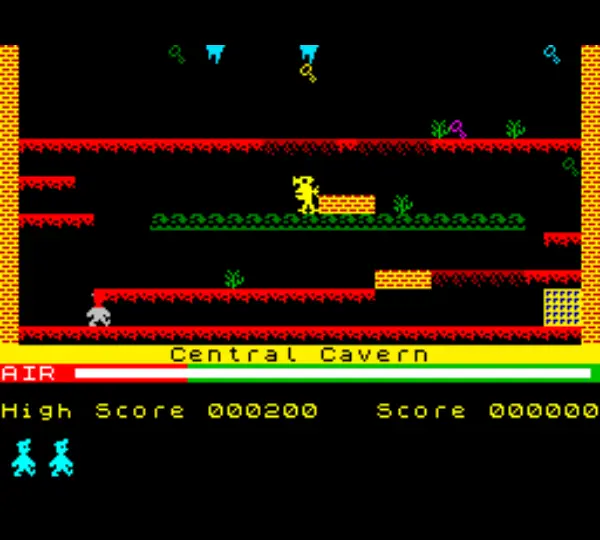
Manic Miner places you in control of Miner Willy, tasked with collecting all the keys scattered around each cavern before an ever-draining oxygen meter reaches zero. Only once every item is gathered does the exit unlock, shunting you into the next screen and its fresh batch of sadistic hazards. Each cavern fits on a single screen, but every inch of it is designed to punish hesitation.
Willy’s movement is precise but completely unforgiving. Jumps must be timed perfectly, as even a tiny misjudgement sends him plunging into spikes, crushing machinery, or lethal environmental hazards. Momentum matters, forcing players to learn arc-like jumps rather than relying purely on twitch reactions.
Enemies follow fixed patrol routes that are harsh but consistent. Mastery comes from memorising their movement patterns and exploiting narrow timing windows. Complicating matters further are moving platforms, conveyor belts, and crushing elements that constantly alter safe routes and force split-second decisions.
The oxygen system is the real source of pressure. Take too long and death is inevitable, pushing players to commit to risky routes even when conditions look unsafe. Bonus items can restore oxygen slightly, but reaching them usually means flirting with disaster. This creates a brutal tension between caution and urgency that remains as effective today as it was in 1983.
The oxygen choke? Manic Miner gives you absolutely no slack. Later caverns stack multiple hazards together while shrinking timing windows to near-unforgiving levels. There are no checkpoints, no safety nets, and no mercy. One mistake ends your run instantly. It can feel merciless, even cruel, but the rules never change. Every failure teaches something, and every success feels earned through genuine mastery.
Graphics: Iconic Screens with Deadly Personality
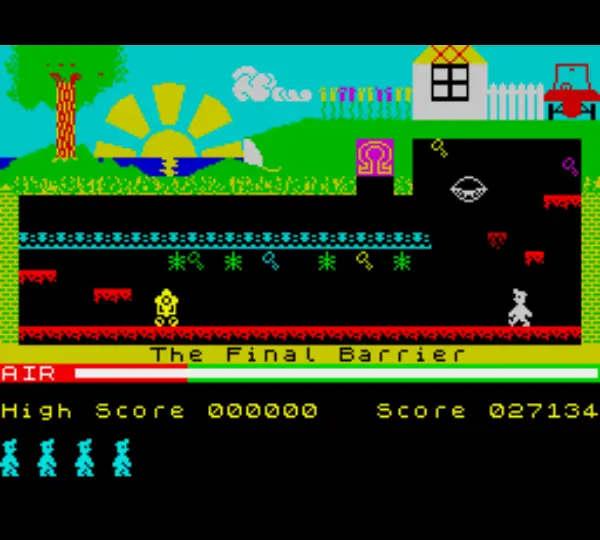
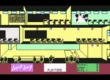
Visually, Manic Miner is an unmistakable Spectrum classic. Each cavern features a distinctive layout filled with memorable elements, from swinging platforms and conveyor belts to surreal hazards such as giant toilets and pixelated guardians. Despite the hardware’s limitations, the game overflows with imagination.
Colour clash is present but smartly managed, using static layouts and bold block colours to clearly define platforms and dangers. Willy’s squat, helmeted sprite animates cleanly, making his jumps and falls easy to read even under pressure. Each screen often feels like a puzzle as much as an obstacle course.
What truly stands out is just how memorable the caverns are. Many players can recall specific screens decades later purely from their shapes and hazard placement, a testament to focused, intelligent design rather than visual excess.
Sound: Beethoven, Beeps, and Rising Panic
Manic Miner famously opens with a beeper rendition of “In the Hall of the Mountain King,” which loops continuously during gameplay. On paper this sounds unbearable. In practice, it becomes inseparable from the experience, with the pace of the music mirroring the relentless drain of the oxygen meter.
Beyond the music, sound effects are minimal but functional. Jumps, collisions, and death cues punctuate the action without clutter. The looping tune can become oppressive during long sessions, but that mounting irritation only reinforces the game’s intense, pressurised atmosphere.
Replayability: Mastery or Nothing
Replayability is woven into Manic Miner’s design. With no forgiveness and a punishing difficulty curve, repetition is mandatory. Each cavern acts as a brutal lesson in timing, movement, and discipline. Progress depends entirely on memorisation and execution.
The scoring system and oxygen bonuses reward efficient play, giving skilled players incentive to optimise routes rather than simply survive. Even today, players return to Manic Miner to chase clean runs, full clears, or simply to see how far muscle memory can carry them.
The Retro Looney Verdict
Manic Miner on the ZX Spectrum is a foundational platforming masterpiece that remains as intimidating as it is influential. Its ruthless difficulty, precise controls, and unforgettable screen design capture the spirit of early home computing in its purest form. This is not a game that apologises or explains itself. Instead, it dares you to rise to its level and rewards perseverance with genuine mastery. In 2025, Manic Miner is still a rite of passage for retro fans and a towering monument to 8-bit design.