
System: Commodore Amiga
Release date: 1994
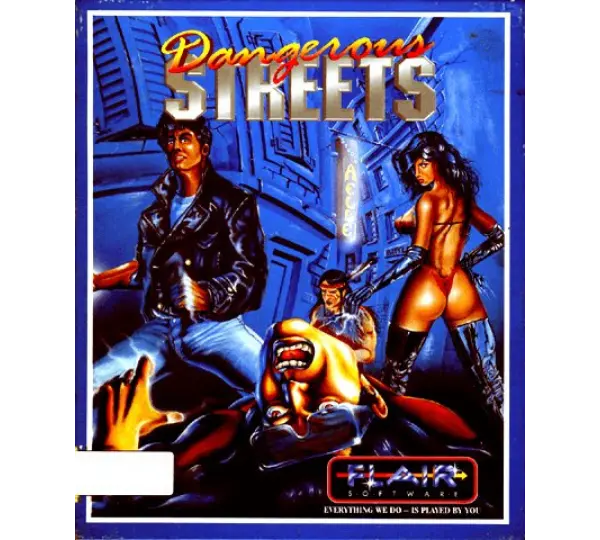
Steel yourself for one of the Amiga’s most infamous scraps with Dangerous Streets, the 1994 one-on-one fighter from Flair Software that aimed squarely at arcade greatness and somehow punched itself clean in the face instead. On paper, it sounds like a nailed-on hit: digitised fighters, gritty arenas, head-to-head combat, and plenty of attitude. In reality, it became a cautionary tale whispered in magazine reviews and replayed endlessly in pub arguments.
This is not a forgotten hidden gem waiting for redemption. This is a game people remember precisely because it went wrong so spectacularly. Time does funny things to reputation though, so the question in 2025 is simple: does Dangerous Streets deserve another look, or is it still swinging wildly in the dark?
Gameplay: Punch, Kick, and Cross Your Fingers
Dangerous Streets sticks rigidly to the classic fighting game blueprint. Pick a combatant, step into the arena, and attempt to knock your opponent senseless using punches, kicks, and special moves. There are no bold innovations here, just straight-up scraps where timing, spacing, and precision should matter.
Unfortunately, the controls have other ideas. Inputs feel oddly disconnected from the action on screen, as if there is a short committee meeting between pressing a button and your fighter responding. Attacks trigger inconsistently, directional commands sometimes register as something else entirely, and hit detection behaves like it has wandered off for a tea break.
Movement is a particular low point. Fighters shuffle around sluggishly, turning positioning into a chore rather than a skill. Jumping feels floaty and awkward, often leaving characters suspended mid-air like they have momentarily forgotten gravity exists. Combos are technically present, but most occur by accident rather than design, emerging from hopeful button mashing rather than any real mastery.
Each fighter promises unique strengths on the selection screen, yet once the bout begins those differences blur together under the weight of stiff animation and unreliable responses. Matches rarely flow. Instead, they lurch from moment to moment, driven more by confusion than rhythm.
The dropped input? Dangerous Streets’ biggest opponent is its own control system. Moves fail to trigger at the exact moments a fighter needs them most, turning exchanges into a lottery. Combine that with wildly inconsistent AI that swings between standing idle and unleashing perfectly timed retaliation, and frustration arrives quickly. Wins feel accidental, losses feel unfair, and the game gives you very little sense of improvement or learning.
Graphics: Digitised Fighters, Unsteady Footing
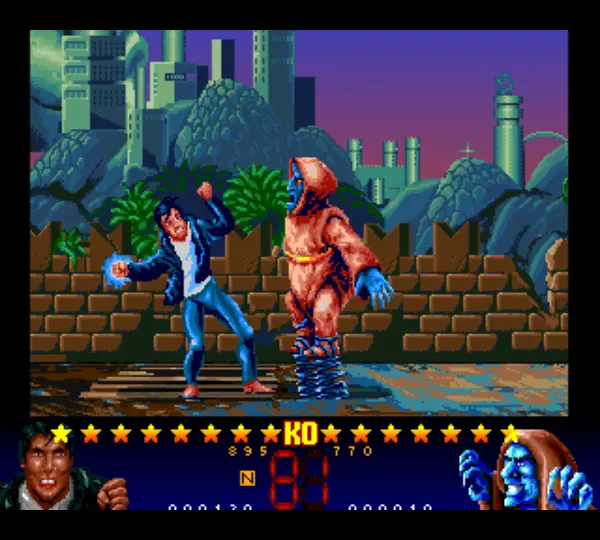
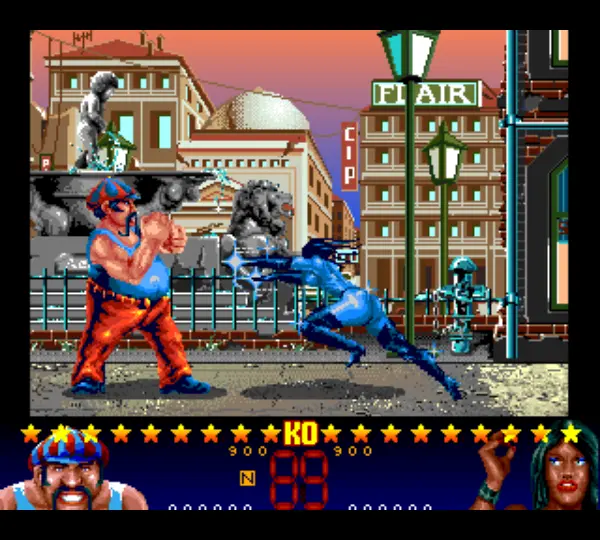
Visually, Dangerous Streets is ambitious if nothing else. Digitised sprites clearly chase the gritty realism of arcade heavyweights, giving the fighters a chunky, almost photographic look. Sadly, the animation undermines the effect. Movements snap abruptly between poses, with little weight or fluidity.
Characters often resemble stiff cardboard cut-outs being dragged across the screen, which makes reading attacks difficult and reacting in time even harder. This lack of visual clarity feeds directly into the gameplay problems, compounding every missed input and mistimed move.
Backgrounds are more successful. Urban streets, industrial zones, and shadowy arenas offer reasonable variety, with bold colours and chunky detail doing their best to carry the presentation. Unfortunately, cluttered scenery and inconsistent scaling muddy depth perception during already chaotic fights. The ambition is obvious, but the technical polish simply is not there.
Sound: Noise Without Impact
The audio design struggles to sell the fantasy of brutal combat. Music tracks have energy on paper, but loop quickly and fade into the background without leaving much of an impression. Rather than hyping you up, they feel like background filler waiting to be tuned out.
Sound effects fare no better. Punches land with disappointing thuds, kicks lack crunch, and vocal grunts sound half-hearted. Audio feedback sometimes lags behind the on-screen action, further disconnecting what you hear from what you see. For a fighting game, that lack of impact is particularly damaging.
Replayability: More Sandwich Filler Than Main Event
Replay value is thin. A small roster, limited modes, and deeply flawed mechanics mean novelty wears off quickly. Once you have endured a handful of bouts and seen what each fighter has to offer, there is very little pulling you back.
That said, Dangerous Streets has carved out a strange afterlife as a curiosity. Played with friends, it can generate laughs thanks to its awkward animations and unpredictable behaviour. As a serious fighter it fails, but as an ironic group experience there is some entertainment to be wrung from the chaos.
The Retro Looney Verdict
Dangerous Streets on the Amiga is a fascinating reminder that ambition alone does not win fights. Its digitised visuals and arcade aspirations are clear to see, but unreliable controls, stiff animation, and inconsistent combat knock it flat almost immediately. It is undeniably flawed and often frustrating, yet oddly memorable because of it. Come expecting arcade finesse and you will be sorely disappointed. Come expecting a bizarre slice of mid-90s Amiga excess and you may just find yourself chuckling through the pain. A notorious mess that earns its reputation honestly.