
System: Super Nintendo Entertainment System
Release date: 1994
Post Contents:
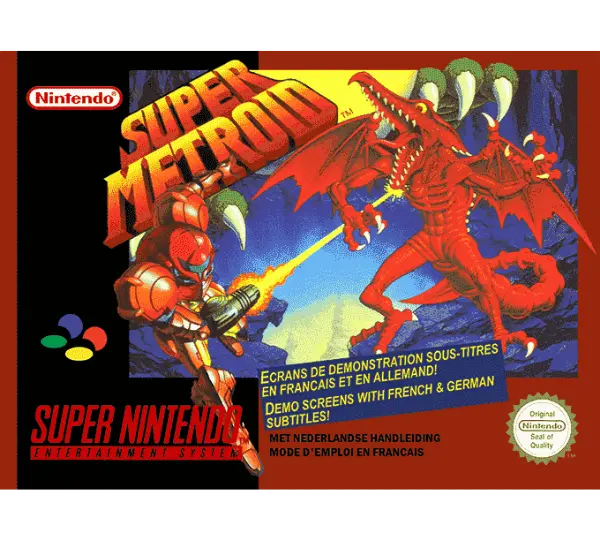
ToggleSuper Metroid on the SNES is the game that dropped you on a dead alien planet, handed you no map and no hand to hold, and somehow made you feel like the cleverest person alive for finding your own way through it.
This Super Metroid title picks up right after Samus Aran hands the last Metroid larva over to scientists, only for Ridley to swipe it and bolt back to planet Zebes. Off she goes after it, alone, armed with a cannon and an increasingly ridiculous collection of upgrades. It’s lonely, atmospheric and utterly confident in the player, and it’s been influencing everything from indie darlings to blockbusters for three decades. In 2026, does this Super Metroid SNES landmark still hold up, or has the genre it helped invent finally left it behind?
Gameplay: Explore, Upgrade, Backtrack, Repeat
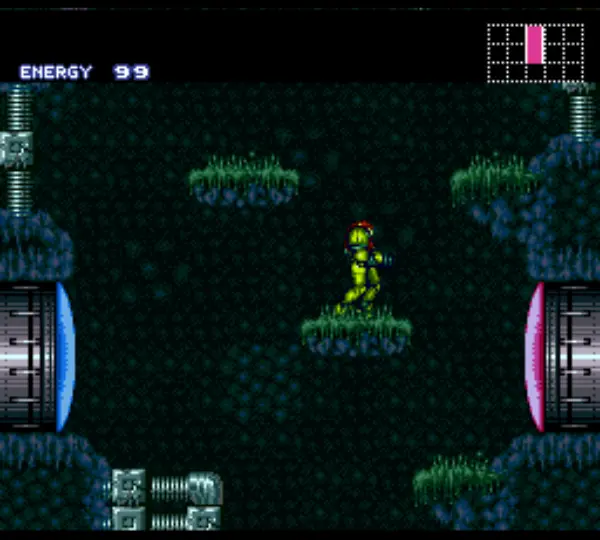
Super Metroid on the SNES throws you into one enormous, interconnected world, and the whole game is built around gradually earning the right to go further. Zebes is split into distinct regions – the overgrown depths of Brinstar, the scorching lava caverns of Norfair, the flooded ruins of Maridia and the eerie Wrecked Ship – each one locked behind abilities you haven’t found yet.
The upgrades are the real currency here. The Morph Ball squeezes you into tight tunnels, the Speed Booster smashes through barriers at full sprint, the Grapple Beam swings you across gaps and the Space Jump lets you soar through areas that were impossible an hour earlier. Every new tool opens up old areas in a fresh way, and that constant “oh, I can get through there now” feeling is one of gaming’s greatest hooks.
Boss fights are proper set pieces, from Kraid’s screen-filling bulk to the sheer spectacle of Ridley and Draygon, and they punctuate the exploration with real tension. Then there’s the final act, which we won’t spoil, except to say it’s one of the most memorable endings in the whole 16-bit era.
The Dead End? Super Metroid on the SNES trusts you a lot, sometimes a bit too much. Progression can get properly obscure in places, with a few secrets and required moves – the wall jump being the classic example – taught in ways that are easy to miss entirely. Wander into the wrong corner of Maridia without the right kit and you can spend a frustrating stretch wondering where on earth you’re meant to go. There’s no quest log, no waypoint, and if you take a break for a fortnight you’ll come back completely lost. It’s by design, but it isn’t for everyone.
Still, when a locked door finally clicks into place with an upgrade you found an hour ago, few games have ever felt this satisfying.
Graphics: A Dead World Full of Detail
Super Metroid on the SNES is one of the most beautiful games of the 16-bit era, and it still looks stunning. Zebes feels like a real, ruined, living place – rain hammering the surface of Crateria, lava glowing across Norfair, deep-blue water shimmering through Maridia.
Samus herself is wonderfully animated, and her chunky armour and fluid movement give every jump, roll and shot real weight. Bosses are huge, detailed and full of character, and the background work throughout gives every area its own distinct mood. It’s atmospheric in a way that plenty of far more powerful hardware struggles to match.
Sound: Music That Makes You Feel Alone
The soundtrack on Super Metroid on the SNES is a masterclass in atmosphere. Rather than pumping out big heroic themes, it leans into eerie ambient tracks and sparse, moody compositions that make you genuinely feel isolated on a hostile alien world. The Brinstar and Norfair themes are all-time classics, and the moment the music swells during a big discovery is pure magic.
Sound effects do a lot of quiet work too – the hum of Samus’s cannon, the echo of your footsteps in an empty corridor, the terrifying roar of a boss announcing itself. It’s a proper piece of sound design that has aged incredibly well.
Replayability: A World Worth Speedrunning
Super Metroid on the SNES has real staying power. A first playthrough is a slow, cautious voyage of discovery, but a second run is a completely different experience once you know where everything is. Hunting down every missile expansion and energy tank for a full 100% clear is a proper challenge, and different endings reward faster completion times.
It also happens to be one of the most beloved speedrunning games ever made, with a whole community devoted to breaking the sequence in increasingly ridiculous ways. Whatever way you play it, Zebes keeps rewarding you for coming back.
The Retro Looney Verdict
Super Metroid on the SNES is one of the finest games ever made, full stop. The world design is masterful, the atmosphere is unmatched, and the constant drip of new abilities makes exploration feel genuinely rewarding rather than like a chore. It’s tense, lonely, beautiful and absolutely packed with secrets.
Yes, a few of its tricks are obscure and you will get lost at least once. But that’s part of the deal. This Super Metroid SNES classic invented an entire genre’s worth of ideas and still does most of them better than anything that followed. If you’ve never played it, sort it out immediately. Grab your Power Suit and go find the last Metroid. Absolute belter.
Don’t forget to check out my other SNES Reviews!

Media