
System: Sony PlayStation
Release date: 1995
Post Contents:
ToggleWipeout on the PlayStation is the game that walked into 1995, looked the entire games industry in the eye, and told it to grow up.
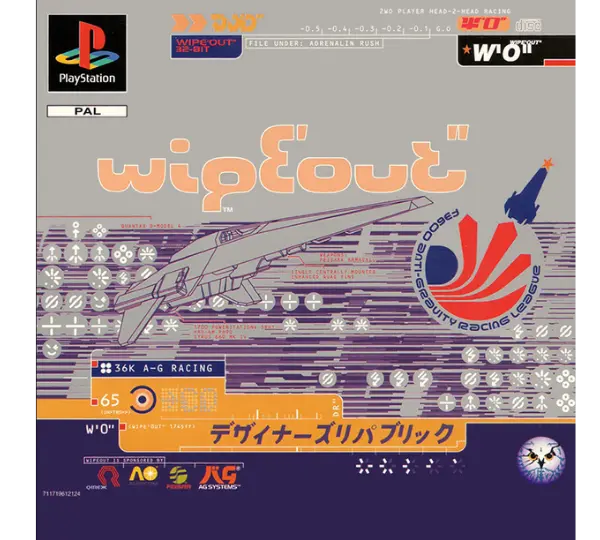
This Wipeout title wasn’t just a racing game – it was a statement. Psygnosis built an anti-gravity racer set in 2052, handed the visual design to The Designers Republic, licensed Leftfield, The Chemical Brothers and Orbital for the soundtrack, and aimed the whole thing squarely at people who went to clubs rather than arcades. It was the game that made the PlayStation cool, and thirty years later the reputation is entirely deserved. In 2026, does this WipEout PS1 launch classic still hit the same, or has the F3600 league finally been retired?
Gameplay: Full Throttle, Mind the Hairpin
The game drops you into the F3600 Anti-Gravity Racing League in the year 2052, picking one of four teams – FEISAR, AG Systems, Auricom and Qirex – each with distinct handling characteristics that meaningfully change how the same track feels to navigate. Six main tracks plus a secret bonus course provide the racing canvas, and the layout of each one demands proper learning rather than instinctive play.
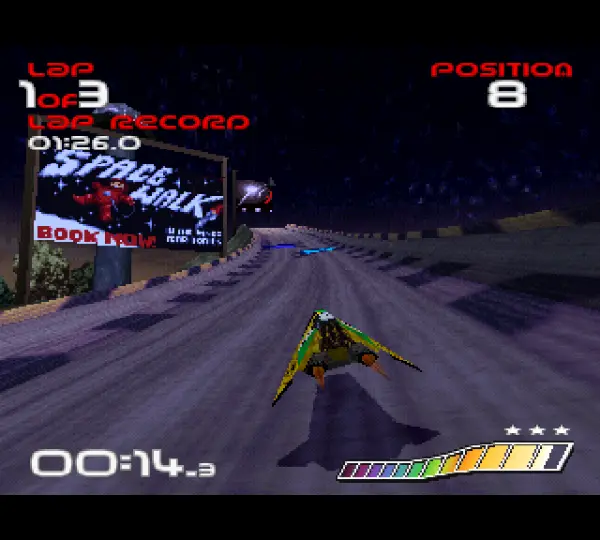
The handling model is the thing that separates Wipeout from the competition immediately. These craft don’t grip – they float, they slide, they carry momentum in ways that punish overcorrection and reward smooth, anticipatory driving. L2 and R2 air-brakes are essential rather than optional, particularly on the tighter hairpins that would be impossible to navigate at speed without them. Hitting a wall brings you to an abrupt and unforgiving stop rather than a gentle ricochet, which is the game’s most punishing design choice and the one that most clearly marks it as a 1995 title.
Weapons and power-ups collected from track pads – rockets, mines, missiles, shockwaves, shields – add a combat dimension that keeps you honest even when you’re running away at the front. Championship, single race and time trial modes give the relatively modest track count reasonable structure.
The Wall Kiss? Wipeout’s handling has a learning curve that genuinely earns the description. Touch a wall at any meaningful speed and you stop dead – no wall-riding, no gentle deflection, just an immediate and complete halt while the rest of the field sails past. At higher speed classes this is a race-ending disaster that happens in a fraction of a second, and the first several hours with the game involve a significant amount of involuntary stopping. The track count is also genuinely slim – six tracks is lean for a racing game even by 1995 standards – and the absence of analogue stick support (predating the DualShock by two years) means precision steering on D-pad alone takes adjustment that feels odd in hindsight.
Graphics: The Future, As Designed by Sheffield
Visually, Wipeout remains one of the most distinctive-looking games of its era. The Designers Republic’s aesthetic runs through every screen – the menus, the track signage, the team liveries, the HUD – and gives the whole thing a coherent visual identity that most racing games of the period couldn’t touch. It looks like a world someone actually designed rather than a collection of polygons pointing in the right direction.
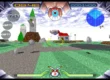
The tracks themselves are brightly coloured, well-textured polygon environments with enough trackside detail to sell the sense of a real venue. Pop-up on the horizon is minimal for the era, the craft models look genuinely cool, and the sense of speed at the higher velocity classes is conveyed convincingly. It has aged into something that looks deliberately stylised rather than simply old.
Sound: The Soundtrack That Changed Everything
The audio is Wipeout’s most enduring achievement and arguably its most culturally significant contribution to gaming. Leftfield’s Afro Ride, The Chemical Brothers’ Chemical Beats, Orbital’s Wipeout – licensed tracks from genuinely significant electronic artists sitting alongside Tim Wright’s in-house CoLD SToRAGE compositions, which hold their own completely. The idea of a racing game with a club-ready soundtrack seems obvious now. In 1995 it was genuinely radical.
Engine sounds and weapon effects sit cleanly beneath the music, the crowd noise at the grandstands adds atmosphere, and the overall audio package is one of the reasons the game felt like a different kind of proposition entirely from anything that came before it on console.
Replayability: Mastery Has No Finish Line
The replay value here is driven almost entirely by the handling model – once the wall-stopping clicks and clean lap times become the obsession, Wipeout becomes the kind of game you return to repeatedly in pursuit of perfection rather than progress. Unlocking the faster Rapier class by winning the Venom championship opens up a significantly more demanding version of familiar tracks, and time trial offers a pure skill test that strips away the chaos of combat racing.
The slim track count is the honest limitation – six locations is not a lot to sustain long-term interest without genuine mastery as the motivation. For players who catch the bug it’s endlessly compelling. For those who don’t connect with the handling model it exits the collection relatively quickly.
The Retro Looney Verdict
Wipeout is a landmark. Not in the hedged, “important for its time” sense that gets applied to games people respect more than enjoy, but genuinely, still-brilliant-now landmark. Psygnosis built something in 1995 that understood exactly what the PlayStation was for and delivered it with total commitment – the design, the music, the handling, the attitude, all of it pointed in the same direction.
The wall-stopping is brutal, the track count is lean, and the D-pad steering takes time to feel natural. None of that changes the fact that this WipEout PS1 classic is still one of the finest racing games ever made and the definitive moment the PlayStation announced itself as something genuinely new. A proper essential. Strap in, master the air-brakes, and don’t touch the walls.
Don’t forget to check out my other PlayStation Reviews!

Media