System: Super Nintendo Entertainment System
Release date: 1990
Post Contents:
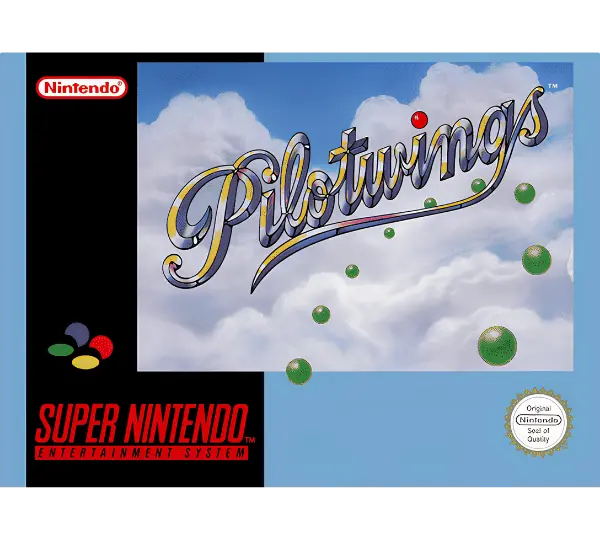
TogglePilotwings on the Super Nintendo Entertainment System is the game that made an entire generation of kids suddenly very interested in getting their pilot’s licence.
This Pilotwings title dropped alongside the SNES and immediately showed every other console on the market exactly what Mode 7 could do. Light planes, hang gliders, skydiving, rocket belts – Nintendo basically handed you a flight school and said crack on. In 2026, does this Pilotwings SNES launch classic still make your stomach drop on the final approach, or has the runway finally closed for good?
Gameplay: Clear Skies, Nerves of Steel
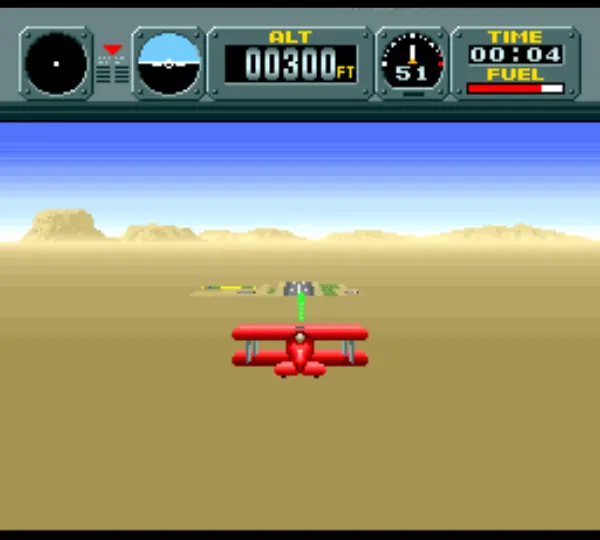
Pilotwings on the Super Nintendo puts you through eight increasingly demanding lessons at the Flight Club, each one testing a different discipline. Light plane landings, skydiving with precision parachute deployment, hang gliding on thermal currents, and the gloriously daft rocket belt – each vehicle handles completely differently and demands its own set of skills.
The scoring system is where the real genius lies. Every lesson grades you on timing, accuracy and landing precision, and you need enough points across each discipline to earn your licence and progress. It’s deceptively simple to understand and genuinely difficult to master. Getting a clean landing feels enormously satisfying, and chasing that perfect score pulls you back through stages you thought you’d already cracked.
Bonus stages add a lovely bit of variety – from jumping through rings on a penguin’s back to navigating obstacle courses – and the Secret Command helicopter missions introduce a brief bit of action that feels completely at odds with the otherwise sedate Flight Club vibe, but brilliant for it.
The Crosswinds? Pilotwings SNES is a short game – a perfect run clears it in under an hour – and the difficulty spikes sharply around lesson three when the hang glider arrives and the thermal currents decide they’re not going to cooperate. Off-screen hazards, momentum-based controls that don’t forgive sudden corrections, and a scoring system that demands near-perfection to progress can all conspire to turn a lovely relaxing flight into a genuinely infuriating retry loop. The lack of mid-lesson checkpoints means one bad landing wipes out minutes of careful flying, and you’ll be restarting from scratch with your instructor’s disappointed frown burned into your brain.
Graphics: Mode 7 and the Ground Gets Closer
Visually, Pilotwings on the Super Nintendo was an absolute jaw-dropper in 1990 and remains quietly impressive today. The Mode 7 ground scaling – the way the terrain rotates and zooms beneath you as you descend – is the centrepiece, and it genuinely still conveys a convincing sense of altitude and movement that plenty of later games struggled to match.
Character sprites are chunky and charming, the instructors pull wonderfully expressive faces depending on how well you’ve performed, and each discipline has enough visual variety to stop things feeling repetitive. It’s not a looker by modern standards, but as a showcase for what the SNES could actually do at launch, Pilotwings remains a genuinely impressive technical achievement wrapped in a cheerful flight school package.
Sound: Soyo Oka’s Skies
Pilotwings on the Super Nintendo features a soundtrack composed by Soyo Oka that is quietly one of the finest collections of music on the entire system. Each discipline gets its own distinct theme – the light plane’s breezy melody, the skydiving track’s gentle urgency, the hang glider’s airy calm – and every one of them perfectly matches the mood of what you’re doing in the air.
The music is notably relaxed for a game that can test your patience considerably, and that’s entirely deliberate. Oka’s compositions keep you calm enough to focus even when your rocket belt landing is going horribly wrong. Sound effects are crisp and purposeful – wind rushing past during freefall, the satisfying thud of a clean landing, the deflating splat of a bad one. A masterclass in audio design that punches well above the hardware’s weight.
Replayability: Always One More Approach
Replayability in Pilotwings for the Super Nintendo is solid if you’re the type who can’t leave a score table alone. Expert mode opens up after completing the main lessons and significantly increases the difficulty, giving completionists a proper reason to return once the credits roll.
Score chasing is the real hook – squeezing out a perfect on every discipline, hunting bonus stages, and nailing the Secret Command missions without breaking a sweat. It’s not endlessly deep, but the precision-based scoring means there’s almost always something to improve on. The kind of game you revisit every year or so, fire up for an hour, and remember exactly why it’s a classic.
The Retro Looney Verdict
Pilotwings on the Super Nintendo is a genuine SNES classic that rarely gets the flowers it deserves. While F-Zero was nicking the headlines at launch, this was the game quietly demonstrating that the SNES could do things no other home console had managed – and wrapping that technical showmanship in genuinely enjoyable, surprisingly deep gameplay.
Yes, it’s short. Yes, the hang glider will ruin your afternoon. But the satisfaction of a perfectly executed skydive, a textbook rocket belt landing, or a clean light plane approach is the kind of pure gaming joy that hasn’t aged a single day. This Pilotwings SNES title from Nintendo still soars. Strap in, check your altimeter, and try not to annoy Big Al.
Don’t forget to check out my other SNES Reviews!

Media