
System: Sinclair ZX Spectrum
Release date: 1983
Post Contents:
ToggleChuckie Egg on the ZX Spectrum is a pure distillation of early arcade design done right. This Chuckie Egg on the ZX Spectrum title turned ladders, hens, and eggs into relentless white-knuckle chaos. Designed by Nigel Alderton, it became a phenomenon in early British gaming. In 2026, does this Chuckie Egg Spectrum classic still kick up the feathers, or has it finally cracked under pressure?
Gameplay: Climb, Collect, and Keep Your Distance
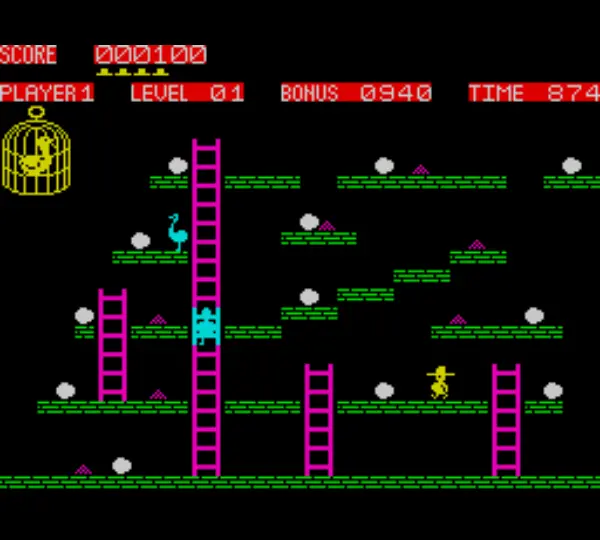
Chuckie Egg on the ZX Spectrum drops you into single-screen arenas. The objective could not be clearer. Collect every egg and reach the nest.
Achieving that goal is another matter entirely. You control Hen-House Harry. Race across narrow platforms. Climb ladders. Avoid patrolling hens that end your run instantly.
Movement is fast and snappy. Running feels almost dangerously quick. Ladder climbing is precise. Jumping demands commitment. There is no chance to hesitate mid-leap.
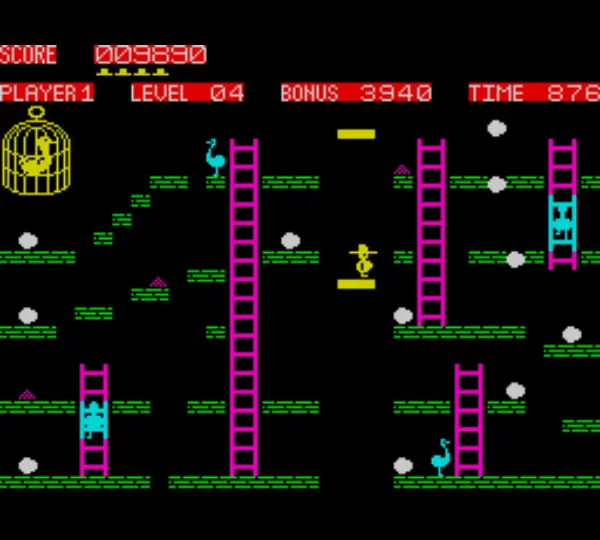
Moving lift platforms shift the layout constantly. They block routes or open opportunities at precisely the wrong moment. Eggs do not respawn once collected. But the pressure ramps up regardless.
The peck? Chuckie Egg on the ZX Spectrum offers absolutely no safety net. One touch from a hen means instant death. There are no checkpoints to soften the blow. Later loops crank the speed to levels that feel borderline cruel. It is merciless and unapologetic. It can feel harsh and occasionally downright savage.
Still, when you nail a clean run and chain together perfect jumps, the satisfaction is massive.
Graphics: Clear, Colourful, and Built for Play
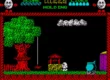
Visually, Chuckie Egg on the ZX Spectrum is a masterclass in functional design. Everything on screen exists for gameplay clarity. Platforms, ladders, eggs, hens, and seeds are instantly recognisable.
Harry’s sprite is small but expressive. The hens bob along their patrol routes with cheerful menace. Level layouts are deliberately constructed to force risky decisions. That clarity is a big reason the game still plays beautifully today in this Chuckie Egg ZX Spectrum classic.
Sound: Squawks, Beeps, and Deadly Silence
Like many early Spectrum titles, Chuckie Egg keeps sound design sparse. There is no background music during gameplay. Only beeps, squawks, and simple cues when eggs are collected or Harry meets a rapid end.
This near-silence works entirely in the game’s favour. Without audio distraction, focus sharpens. Timing tightens. Tension builds naturally. The lack of music becomes part of the experience. It creates a rhythm dictated entirely by movement and concentration in this Chuckie Egg on the ZX Spectrum release.
Replayability: High Scores or Nothing
Replayability is where Chuckie Egg on the ZX Spectrum truly earns its legendary status. Its looping structure and relentless focus on score make it endlessly compelling. Each run becomes a personal challenge to squeeze out a few more points.
Learning enemy behaviour and perfecting routes separates newcomers from seasoned veterans. Whether played for five minutes or an hour, Chuckie Egg always finds a way to pull you back in. This Chuckie Egg 1983 ZX Spectrum title rewards practice and still feels addictive decades later.
The Retro Looney Verdict
Chuckie Egg on the ZX Spectrum is a pure distillation of early arcade design done right. Its flawless controls, clear visuals, and brutal difficulty curve explain exactly why it became one of the machine’s defining titles. It offers no mercy and very little forgiveness. But every inch of progress feels earned.
Decades later, it remains as addictive, demanding, and rewarding as ever. This Chuckie Egg Spectrum classic still pecks hard. It captures that perfect balance of accessibility and challenge. From the snappy movement to the escalating tension and satisfying high-score chasing, it remains endlessly playable. A proper Speccy legend that deserves its place in any retro collection. Definitely worth loading up for another frantic egg hunt in 2026.
Don’t forget to check out my other ZX Spectrum Reviews!

Media