
System: Nintendo Game Boy
Release date: 1991
Post Contents:
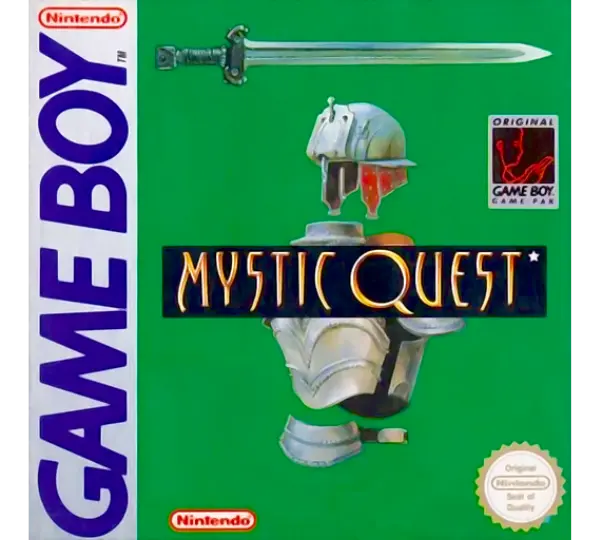
ToggleMystic Quest on the Game Boy is a cracking little adventure that still holds a special place in my heart. This Mystic Quest Game Boy title quietly laid the foundations for what would become Square’s beloved Mana series. You play a young hero escaping slavery and slowly growing into a legendary warrior destined to face the Dark Lord. Mixing real-time combat, light RPG progression and a surprisingly touching story, Mystic Quest on the Game Boy was ambitious stuff for a handheld in 1991. In 2026, does this Mystic Quest handheld RPG still cast a spell, or has time finally broken its enchantment?
Gameplay: Hack, Spell, and Explore
Mystic Quest on the Game Boy blends overhead action with light RPG elements in a way that still feels fresh today. You swing swords, throw axes, cast spells and switch weapons on the fly to solve environmental puzzles and smash through enemies. Combat happens in real time, so positioning and timing matter as much as stats.
Dungeons are packed with clever challenges. You push blocks, flip switches and use the right tool for the job. Weapons aren’t just for fighting; they’re also tools for progression. Magic adds ranged options but needs careful management. Your hero levels up and improves stats. Temporary allies join the journey, adding both combat support and story flavour.
The game steadily opens up with new abilities. This keeps the sense of discovery alive right until the end in this Mystic Quest 1991 Game Boy release.
The Dark Lord’s curse? Combat can feel a bit clunky at times. Hit detection isn’t always generous and some dungeons lean heavily on trial-and-error. A few sections are genuinely frustrating if you’re not sure what you’re supposed to do. Inventory swapping interrupts the flow more than you’d like. The difficulty can spike sharply in the later areas. Still, the satisfying mix of action and light puzzling keeps you pushing forward through the adventure.
Graphics: Monochrome Fantasy with Heart
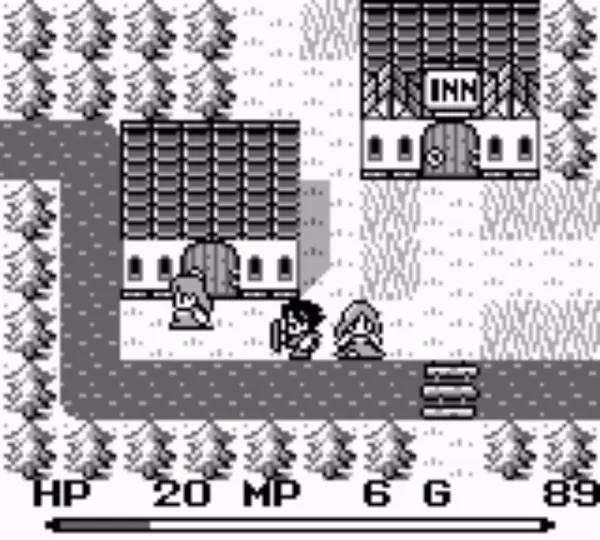
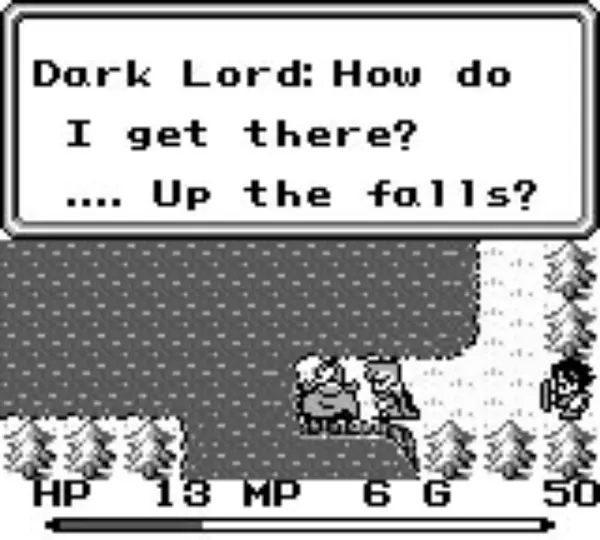
Considering the Game Boy’s limitations, Mystic Quest on the Game Boy looks excellent. Smart shading and detailed sprites give the world real atmosphere. The hero and enemies have plenty of personality. Each region feels distinct – lush forests, gloomy ruins, snowy peaks and ancient temples all stand out even in black and white.
The cutscenes add nice little storytelling touches too. It’s charming, expressive and punches well above its hardware weight. The visuals do a great job of creating an immersive fantasy world on the small monochrome screen in this Mystic Quest Game Boy handheld RPG.
Sound: Chiptune Adventure with Soul
The music is a highlight, with strong heroic overworld themes, moody dungeon tracks and stirring boss music. Even through the Game Boy’s tiny speaker, the melodies carry real emotion and stick in your head. Sound effects are crisp and clear, from sword swings to spell casts and enemy defeats.
It’s atmospheric without ever feeling gloomy. The audio package suits the adventure perfectly and helps pull you deeper into the story.
Replayability: A Quest Worth Re-Embarking
There’s solid reason to come back to Mystic Quest on the Game Boy. Different stat builds change how the game feels. Hunting for every secret or trying to complete the adventure more efficiently gives you clear goals. The relatively compact length makes it easy to replay in full.
The story and characters are charming enough to enjoy a second time around. Whether you’re focusing on magic or going full strength, each playthrough offers something new to discover in this Mystic Quest 1991 Game Boy release.
The Retro Looney Verdict
Mystic Quest on the Game Boy is a cracking little adventure that still holds a special place in my heart. It’s got that classic Square charm, a proper sense of exploration, and some genuinely memorable moments despite the monochrome screen. Yeah, the combat can feel a bit stiff and a few dungeons are properly annoying, but none of that stops it being one of the best early Game Boy RPGs.
As the quiet ancestor of the Mana series, this Mystic Quest Game Boy title is more than just a curiosity – it’s a proper handheld gem. If you’ve never given it a go, dig out the old grey brick and give it a whirl. You might be surprised how well it still holds up in 2026. The blend of action and light RPG elements creates a really enjoyable experience that feels ahead of its time for a Game Boy title. From the satisfying combat to the sense of progression as your hero grows stronger, there’s a lot to love here.
It may not have the scale of later Mana games, but it has bags of heart and charm that make it a joy to revisit. A hidden classic that deserves more attention from retro fans.
Don’t forget to check out my other Game Boy Reviews!

Media